An Honest Reckoning: Assessing British Air Power Against the Demands of a Peer Conflict
The RAF has not fought a peer adversary since the Second World War. Every conflict in which British air power has been deployed since 1945 — from Korea to the Falklands, from the Gulf to Libya — has involved an opponent whose air force was either qualitatively inferior, quantitatively overwhelmed, or both. This is not a criticism; it reflects the strategic environment in which Britain has operated and the alliances through which it has projected power. But it does mean that the RAF's institutional understanding of high-intensity, contested-airspace warfare is, of necessity, largely theoretical — derived from exercises, modelling, and the analysis of conflicts in which Britain was not a participant. As the strategic environment deteriorates and the prospect of peer competition becomes less remote, that theoretical understanding is being tested against an increasingly demanding reality.
What the Exercises Reveal
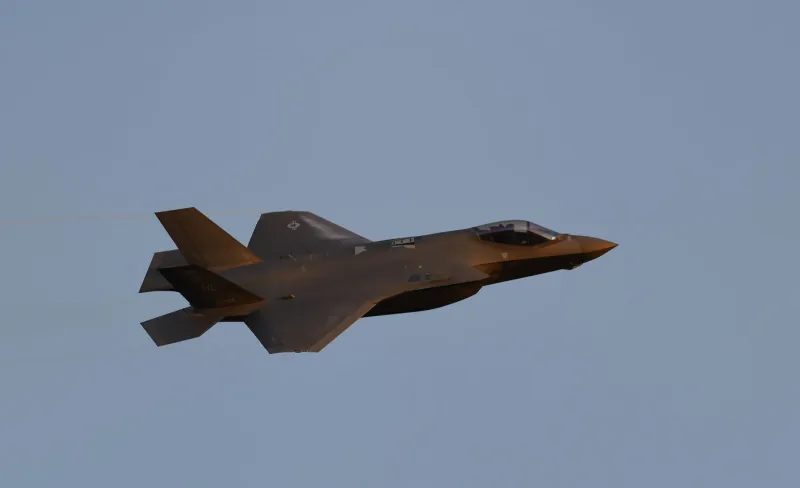
NATO's large-scale air exercises — most recently the Baltic and Nordic-focused events that have grown substantially in ambition and realism since Russia's full-scale invasion of Ukraine in 2022 — have provided genuine insight into the RAF's relative strengths and limitations. British aircrew and the platforms they operate consistently perform well in terms of individual skill, tactical sophistication, and the integration of air and ground capabilities. The F-35B's sensor fusion and data-sharing architecture, in particular, has demonstrated its value in complex, multi-domain scenarios, enabling RAF pilots to contribute to a common recognised air picture in ways that older platforms cannot match.
The limitations, however, are also visible. The RAF's frontline fast jet fleet is small by any historical comparison. With Typhoon and F-35B squadrons numbering in the dozens of aircraft rather than the hundreds, the service lacks the depth to absorb attrition at the rates that historical peer conflicts — and contemporary modelling of high-intensity scenarios — suggest are plausible. In the early weeks of a major air campaign against a sophisticated adversary, aircraft losses could be significant. The question of whether Britain's industrial and logistical base could replace those losses, or even sustain the operational tempo required, is one to which the honest answer is: not quickly, and not without allies.
The Munitions Question
Aircraft availability is only one dimension of the problem. The other is magazine depth — the stockpile of precision munitions available to sustain a high-intensity campaign over a meaningful period. The experience of Ukraine has been instructive in this regard. Even nations with substantially larger defence budgets and industrial bases than the United Kingdom have found their munitions stockpiles depleted at rates that surprised planners who had not seriously modelled a sustained peer conflict. Britain's inventory of air-launched weapons — Storm Shadow cruise missiles, Brimstone anti-armour munitions, Meteor beyond-visual-range air-to-air missiles — represents a genuine capability edge in qualitative terms. In quantitative terms, the picture is less reassuring.
The Ministry of Defence has acknowledged the need to increase munitions production and stockpiling, and there is evidence of investment in this area. MBDA, the principal supplier of air-launched weapons to the RAF, has received funding to expand production capacity. But production lines take time to scale, and the gap between current stockpile levels and what a sustained high-intensity campaign would consume remains a source of concern among analysts with access to relevant data.
Electronic Warfare and Contested Airspace
A peer conflict against Russia or a China-aligned adversary would, from the outset, involve a sophisticated and layered air defence environment. Integrated air defence systems of the kind that Russia has deployed — combining long-range surface-to-air missiles, fighter aircraft, and extensive electronic warfare capabilities — present a challenge of a different order from the largely permissive airspace environments in which the RAF has operated in recent decades. The ability to suppress or destroy enemy air defences, to operate effectively in a heavily jammed electromagnetic environment, and to maintain communications and data links under active electronic attack are capabilities that require specific investment, training, and equipment.
The RAF's electronic warfare posture has improved in recent years, and the F-35B's low-observable characteristics provide a meaningful advantage in penetrating contested airspace. But the Typhoon — which constitutes the majority of the RAF's fast jet strength — is not a stealth platform. Its survivability in a high-threat environment depends heavily on electronic countermeasures, stand-off weapons, and the suppression of enemy defences by other means. Whether those means are available in sufficient quantity and sophistication is a question that current procurement timelines do not fully resolve.
The Procurement Timeline Problem
Britain's long-term answer to many of these challenges is, in part, the Global Combat Air Programme — the sixth-generation fighter being developed in partnership with Japan and Italy, intended to enter service in the 2030s. GCAP will, if delivered on schedule and to specification, provide the RAF with a platform of genuine peer-competitive capability. But the 2030s are not the 2020s. The strategic environment is deteriorating now, and the gap between current capability and future requirement is one that must be managed with existing assets and modest procurement budgets.
In the near term, the most impactful investments are likely to be those that increase the availability and effectiveness of existing platforms: enhanced maintenance funding, accelerated munitions production, investment in electronic warfare, and the development of the operational concepts and training that would govern how the RAF fights in a genuinely contested environment. These are less visible than new aircraft programmes, and they generate less political capital, but they are arguably more consequential for actual readiness.
A Force Worth Having
None of this analysis should be taken to suggest that the RAF is not a formidable force. It is. The quality of its personnel, the sophistication of its lead platforms, and the depth of its operational experience make it one of the most capable air forces in Europe. In a NATO context — which is the only realistic context in which Britain would engage a peer adversary — the RAF contributes meaningfully to an alliance capability that, in aggregate, substantially outweighs any plausible opponent.
But NATO is not a guarantee. It is a collective commitment that depends on each member fulfilling its obligations, and Britain's ability to fulfil those obligations is constrained by the scale of its force, the depth of its stockpiles, and the pace of its procurement. Acknowledging those constraints honestly is not defeatism. It is the first step toward addressing them — and the RAF, its political masters, and the British public deserve that honesty.