Ingenuity Over Expenditure: How RAF Engineers Are Doing More With Less and Why It Matters
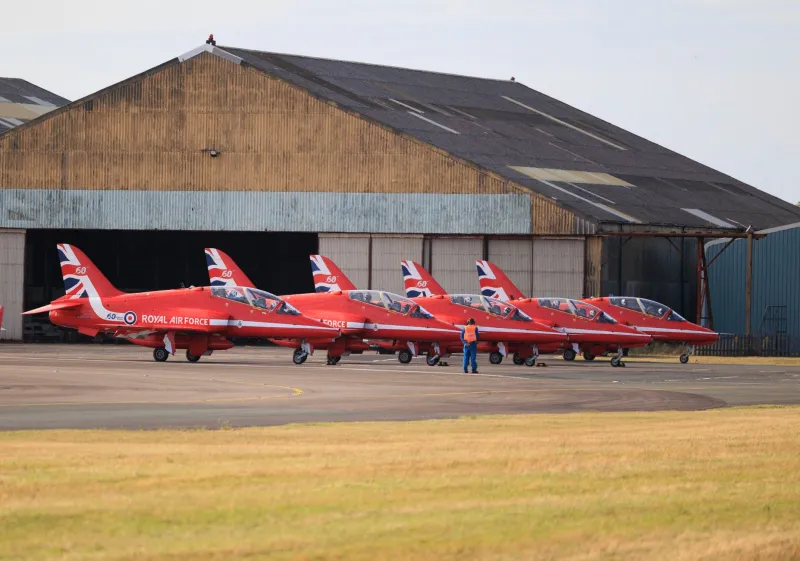
There is a certain irony embedded in the phrase "defence spending cuts". To the casual observer, reducing the budget available to maintain complex, high-performance military aircraft sounds like an unambiguous step backwards — a diminishment of capability, a hollowing-out of national security. Yet within the hangars and workshops of Royal Air Force stations across the United Kingdom, a rather different story has been unfolding for the better part of two decades. Faced with shrinking allocations and rising operational demands, RAF engineers have not simply made do. They have, in many cases, made better.
The culture of ingenuity that has taken root across RAF engineering and procurement teams deserves far more attention than it typically receives. It is a culture shaped by necessity, certainly, but also by a professional pride that refuses to accept degraded output as an acceptable consequence of constrained input.
The Retrofit Revolution
Perhaps the most visible expression of this ethos is the RAF's sustained commitment to the retrofit as a primary tool of capability enhancement. Rather than pursuing costly new-build programmes for every operational requirement, procurement teams have repeatedly demonstrated that upgrading existing platforms can deliver substantial performance gains at a fraction of the acquisition cost.
The Tornado GR4, which served the RAF until its retirement in 2019, is a case study worth examining. Over its operational life, the aircraft underwent a series of incremental upgrades — avionics modernisation, the integration of Brimstone and Paveway IV munitions, and improvements to its targeting systems — that collectively transformed a Cold War strike aircraft into a precision weapon capable of operating effectively in the complex, threat-dense environments of Iraq, Afghanistan, and Syria. None of these enhancements required a new airframe. All of them extended the aircraft's relevance and postponed the need for a far more expensive replacement.
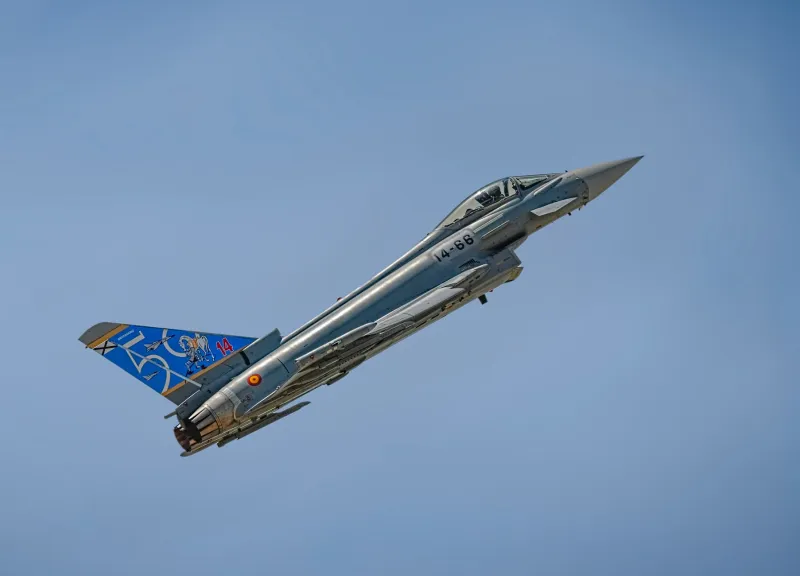
A similar philosophy has guided elements of the Typhoon programme. The RAF's Eurofighter fleet has received successive capability tranches through software updates and hardware integration that, while not inexpensive in absolute terms, represent considerable value against the alternative of procuring additional specialist platforms. The ongoing work to integrate the Meteor beyond-visual-range missile and the AESA radar under Project Centurion exemplifies this approach: enhancing what already exists rather than commissioning something entirely new.
Software as the New Spanner
If physical retrofits represent one strand of RAF engineering innovation, the growing role of software development represents another — and in some respects a more transformative one. The shift towards software-defined capability has opened avenues for rapid, low-cost improvement that would have been inconceivable in an earlier era of purely mechanical systems.
RAF technicians and specialist engineering units have increasingly developed bespoke software tools in-house, reducing reliance on expensive external contractors for modifications that, while technically demanding, fall within the competence of the service's own personnel. Simulation environments, mission planning systems, and maintenance diagnostic tools have all benefited from this approach. The financial savings are meaningful; the secondary benefit — keeping critical knowledge and capability within the service rather than outsourcing it — is arguably more significant still.
The RAF's engagement with digital twin technology, which creates virtual replicas of physical aircraft systems to model wear, stress, and maintenance requirements, illustrates the direction of travel. By predicting component failures before they occur and optimising maintenance schedules accordingly, digital twin applications reduce both unplanned downtime and the cost of unnecessary preventative work. The upfront investment in these systems is recovered many times over across a fleet's operational life.
Cannibalisation, Commonality, and the Art of the Possible
Less glamorous but no less important is the RAF's approach to parts management and fleet commonality. The deliberate pursuit of shared components across different aircraft types — where operationally feasible — reduces the complexity and cost of the supply chain while improving the availability of spares. Engineers who can work across multiple platforms also offer greater flexibility in how manpower is deployed, reducing the inefficiencies that arise when specialist knowledge is too narrowly concentrated.
The practice of controlled cannibalisation — temporarily removing serviceable components from lower-priority aircraft to keep higher-priority ones operational — is another tool employed with considerable skill by RAF ground crews. It is a practice that requires meticulous record-keeping and careful management to avoid creating cascading availability problems, but when handled properly it represents a pragmatic and effective response to short-term supply constraints.
These are not glamorous solutions. They do not generate headlines in the way that a new aircraft type or a cutting-edge weapons system does. But they are the connective tissue of operational readiness, the unglamorous work that keeps squadrons flying when the procurement pipeline is slow and the budget is tight.
What Other Public Services Might Learn
The lessons embedded in the RAF's engineering culture are not exclusively of interest to defence professionals. Any large public institution operating under sustained financial pressure — the National Health Service, local government infrastructure departments, public transport operators — faces a version of the same challenge: how to maintain service quality when the resources available to do so are insufficient.
The RAF's experience suggests several transferable principles. First, invest in the knowledge and problem-solving capacity of your own workforce rather than defaulting to external expertise at every turn. Second, treat existing assets as platforms for improvement rather than liabilities to be replaced. Third, embrace data-driven maintenance and operational planning as a means of extracting maximum value from what you already own.
None of this is to suggest that financial constraint is desirable, or that the RAF has not faced genuine capability gaps as a consequence of budget pressures. It has. The reduction in fast jet numbers, the delays to certain procurement programmes, and the persistent pressure on personnel numbers have all had real operational consequences. Ingenuity is not a substitute for adequate funding; it is a response to the absence of it.
The Human Factor
Underpinning all of this innovation is something that does not appear on any balance sheet: the commitment and creativity of the men and women who maintain, modify, and operate RAF aircraft. Engineering excellence in a resource-constrained environment is ultimately a human achievement. It requires people who are technically proficient, professionally motivated, and willing to apply genuine intellectual effort to problems that have no obvious off-the-shelf solution.
The RAF has historically invested heavily in the quality of its engineering training, and that investment continues to pay dividends in precisely these circumstances. Technicians who understand not just how to follow a maintenance procedure but why each step matters are better equipped to identify innovative solutions when standard procedures cannot be applied.
In an era when the demands placed on British air power show no sign of diminishing, and when the financial environment remains challenging, that human ingenuity may prove to be the most important procurement decision the RAF ever made.