Scotland's Shield: Inside RAF Lossiemouth's Role as Britain's Arctic Sentinel
A Station Reborn for a New Era of Threat
There is something quietly extraordinary about RAF Lossiemouth. Set against the austere coastline of Moray, flanked by farmland and the grey expanse of the North Sea, it does not announce its importance. Yet within the corridors of the Ministry of Defence and across NATO's northern command structures, this station has become indispensable. Over the past decade, as Russian military activity in the High North has intensified, Lossiemouth has transformed from a capable regional base into Britain's primary bulwark against Arctic-borne provocation.
The numbers tell part of the story. Quick Reaction Alert — the system by which RAF Typhoons are held at immediate readiness to intercept unidentified or non-compliant aircraft — has been scrambled with markedly greater frequency in recent years. Russian Tu-95 Bear bombers, Tu-160 Blackjacks, and maritime patrol aircraft have been tracked probing the edges of UK airspace with a persistence not seen since the Cold War's most confrontational decades. Lossiemouth's Typhoons are invariably the first RAF assets airborne in response.
Expansion on a Significant Scale
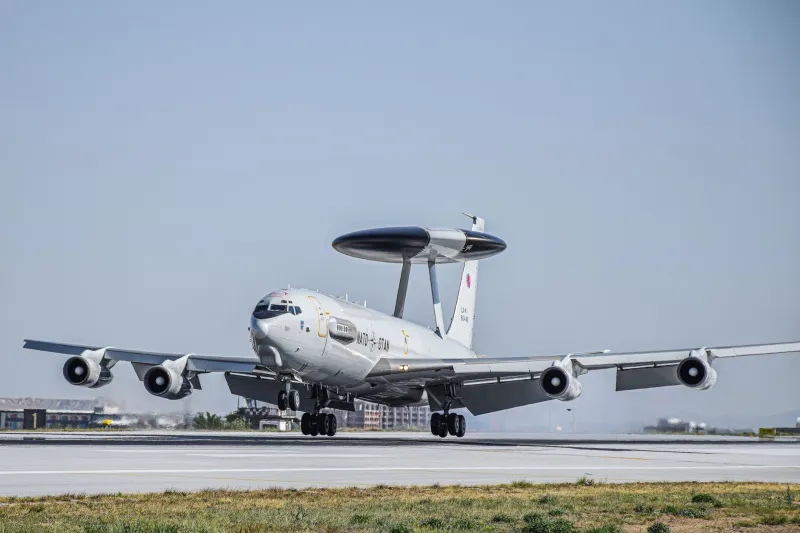
Recognising the base's growing strategic burden, the government has committed substantial investment to Lossiemouth's infrastructure. The arrival of the P-8A Poseidon maritime patrol aircraft — replacing the capability gap left by the retirement of the Nimrod MR2 — marked one of the most significant enhancements in the station's recent history. New hardened aircraft shelters, upgraded taxiways, and expanded maintenance facilities have all been delivered or are currently underway as part of a broader modernisation programme.
The Poseidon fleet, operated by 120 and 201 Squadrons, extends Lossiemouth's reach dramatically into the North Atlantic and Arctic Ocean, providing persistent surveillance of submarine activity beneath the waves while the Typhoons address threats above them. The layered nature of this capability — surface, sub-surface, and airborne — makes the station genuinely multi-domain in its operational scope, a characteristic that NATO partners have noted with considerable approval.
Beyond aircraft, the investment in personnel accommodation, logistics facilities, and command infrastructure reflects a long-term institutional commitment. Lossiemouth is not being prepared for a temporary surge; it is being shaped for sustained high-tempo operations across an indefinite horizon.
The Typhoon Squadrons and the QRA Mission
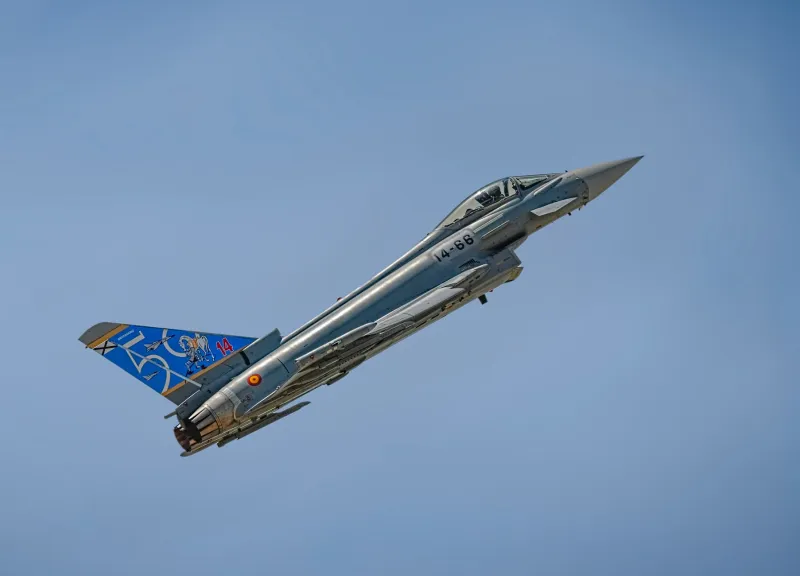
At the core of Lossiemouth's deterrent posture are its Typhoon squadrons. Numbers 1(F) Squadron and XI(F) Squadron maintain the Quick Reaction Alert Northern commitment, ensuring that armed, fuelled aircraft and their crews can be airborne within minutes of a scramble order. It is a routine that demands extraordinary discipline — pilots must be physically proximate to their aircraft at all times during alert periods, their kit donned, their minds sharp regardless of the hour.
The intercept itself is rarely simple. Russian aircraft typically approach without filing flight plans or maintaining radio contact, obliging RAF crews to close at speed, establish visual identification, and, where appropriate, signal the intruding aircraft to alter course. These are not aggressive confrontations in the conventional sense, but they are tense, professional encounters conducted at altitude and at distance from any immediate support. Debriefs are thorough; every intercept is documented and analysed for patterns that might indicate shifting Russian intentions.
For the aircrew involved, the psychological weight of QRA is distinct from conventional training sorties. The knowledge that a scramble could come at 0300 on a January morning, requiring an immediate transition from sleep to supersonic flight, shapes how pilots approach their rest, their fitness, and their mental preparedness. Squadron cultures at Lossiemouth have adapted accordingly, placing considerable emphasis on resilience and readiness management.
Cold-Weather Operations: A Discipline of Their Own
Operating from northern Scotland introduces environmental challenges that bases further south seldom encounter at the same intensity. Winter temperatures at Lossiemouth can plunge well below freezing, and the combination of wind, moisture, and ice creates conditions that test both aircraft and the personnel responsible for maintaining them.
Ground crews face particular demands. De-icing procedures for Typhoon airframes must be executed with precision — ice contamination on control surfaces or sensor apertures can compromise an aircraft's performance at exactly the moment maximum capability is required. The time pressure inherent in QRA operations means that ground technicians must work swiftly without sacrificing the rigour that airworthiness demands. In darkness, in bitter wind, with gloved hands and condensation fogging visors, they prepare aircraft to a standard that admits no compromise.
The station's engineers have developed cold-weather operating procedures refined through years of practical experience. Lubricants behave differently at low temperatures; hydraulic systems require careful monitoring; engine starts demand adjusted techniques. None of this is insurmountable, but it represents a genuine operational overhead that distinguishes Lossiemouth from bases in, say, Lincolnshire or Oxfordshire.
For aircrew, flying in Arctic conditions introduces additional considerations around physiological management and survival. If an ejection were to occur over the northern North Sea or the approaches to the Norwegian Sea, the survival window before hypothermia becomes critical is measured in minutes. Survival training for Lossiemouth-based aircrew reflects this reality, with cold-water immersion drills and Arctic survival exercises forming a regular component of their continuation training syllabus.
A NATO Asset as Much as a National One
It would be a mistake to view RAF Lossiemouth purely through a national lens. The base's capabilities are integrated into NATO's Integrated Air and Missile Defence architecture, and its Typhoon and Poseidon assets contribute directly to alliance-wide situational awareness. Norwegian, Danish, and American counterparts coordinate closely with Lossiemouth's operations, sharing intelligence, deconflicting patrol areas, and occasionally conducting joint intercepts.
This alliance dimension has grown more prominent since Russia's full-scale invasion of Ukraine in 2022, which prompted a fundamental reassessment of northern European security arrangements. The High North — once considered a theatre of managed competition — is now viewed across NATO capitals as a domain of active strategic contest. Lossiemouth's position at the apex of the UK's northern response has consequently attracted greater political and military attention than at any point since the Cold War's conclusion.
The Human Dimension
Beyond the aircraft, the sensors, and the strategic calculus, RAF Lossiemouth is a community of roughly 3,000 military and civilian personnel, many of whom have relocated families to Moray from other parts of the country. The local area — Elgin, Forres, the Speyside coast — has absorbed successive generations of RAF families, and the relationship between the station and its surrounding communities is one of genuine mutual regard.
For those posted here, the remoteness that might initially seem a drawback often becomes a source of pride. There is a clarity of purpose at Lossiemouth that personnel frequently describe in terms that distinguish it from busier, more bureaucratically congested stations. When the scramble klaxon sounds, everyone on the base understands precisely what is at stake. That shared sense of mission, forged in cold air and constant readiness, is perhaps the station's most durable asset of all.