Guardians Above the Horizon: How the RAF's Airborne Early Warning Force Keeps Britain's Skies Secure
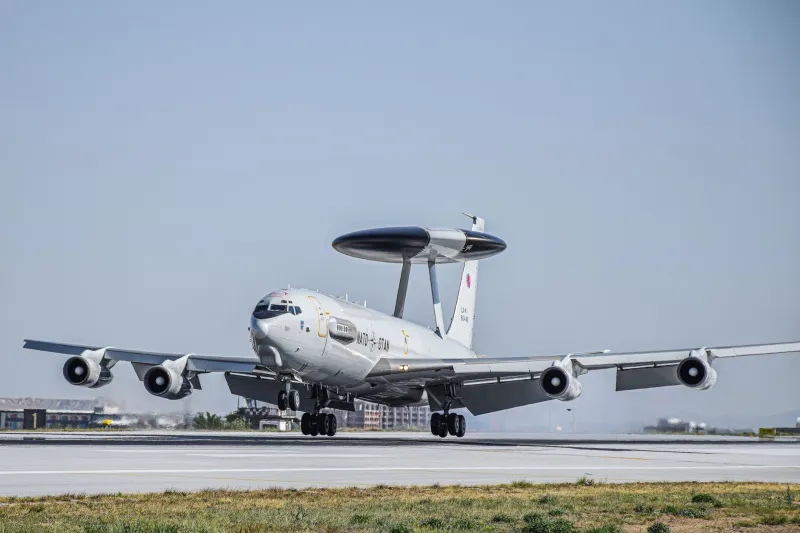
High above the cloud layer, far from the headlines and the airshow crowds, a distinctive silhouette turns slow, deliberate orbits over the North Sea. The rotodome mounted above the fuselage of an RAF E-3D Sentry rotates at six revolutions per minute, its pulse-Doppler radar sweeping hundreds of miles in every direction. Below, on the ground and in the cockpits of fast jets, commanders and pilots alike are dependent on the picture being built inside that aircraft. Without it, much of what the RAF does in the air becomes, at best, considerably more hazardous.
Airborne early warning — commonly abbreviated to AEW — is one of those capabilities that rarely attracts public attention until it is absent. Yet within defence circles, and particularly within the RAF itself, the importance of maintaining a credible, persistent AEW force is regarded as foundational. It is not merely an asset; it is the nervous system through which air operations are co-ordinated, threats are identified at distance, and tactical decisions are made before an adversary has the opportunity to act first.
What the Sentry Actually Does
The Boeing E-3D Sentry, operated by the RAF's No. 8 Squadron and No. 23 Squadron from RAF Waddington in Lincolnshire, is a modified 707 airframe carrying the AN/APY-2 radar system — a sophisticated active electronically scanned array capable of tracking hundreds of targets simultaneously across an enormous volume of airspace. Unlike ground-based radar, which is inherently limited by the curvature of the earth, an AEW aircraft operating at altitude can detect low-flying targets at distances that would render them entirely invisible to surface installations.
This geometric advantage is not trivial. A fast jet flying at 200 feet to avoid detection by ground radar becomes visible to an E-3D operating at 30,000 feet at a range that provides ample time for an intercept to be vectored. The aircraft does not merely detect; it fuses data from multiple sensors, correlates tracks, identifies friend from foe using IFF (Identification Friend or Foe) systems, and relays a coherent operational picture to ground commanders, naval vessels, and airborne assets simultaneously.
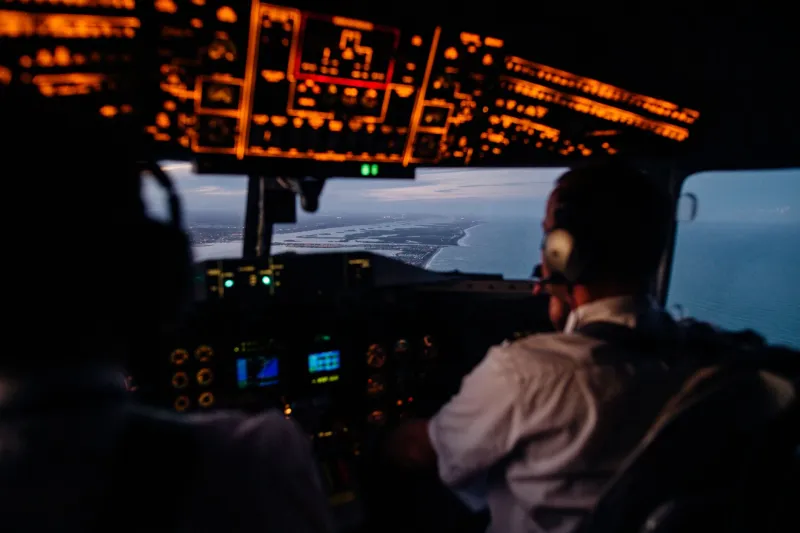
On board, a crew of up to seventeen personnel — comprising pilots, navigators, and a substantial team of mission specialists — work across a bank of consoles to manage this information flow. The role demands exceptional situational awareness, methodical discipline, and the ability to communicate clearly under pressure. Crew members describe the environment as simultaneously intense and deeply collaborative. Every track on the display represents a decision point; every communication to a fast jet crew could be the difference between a successful intercept and a missed threat.
The Architecture of British Air Defence
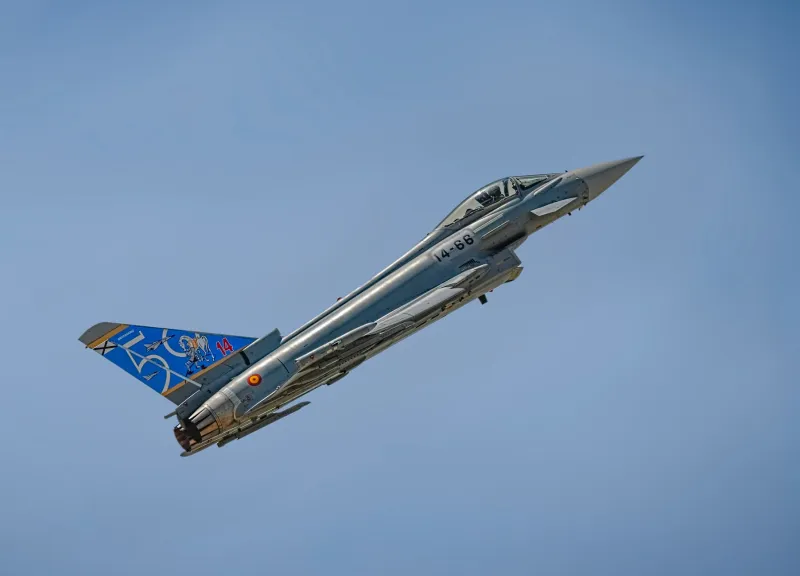
The E-3D does not operate in isolation. It sits at the centre of a layered air defence architecture that includes ground-based radar stations — among them the RAF's Air Surveillance and Control System (ASACS) — surface-to-air missile batteries, and the Quick Reaction Alert (QRA) force maintained by Typhoon aircraft at RAF Lossiemouth and RAF Coningsby. The Sentry's role is to extend and enhance this architecture, filling the gaps that fixed installations cannot cover and providing a command-and-control node that can be repositioned as operational requirements dictate.
During NATO exercises and real-world operations over the Baltic region — where the alliance has maintained a persistent air policing presence in response to increased Russian military activity — RAF E-3Ds have been integral to co-ordinating multinational air operations. The ability to manage aircraft from multiple nations, operating different equipment and communicating in different languages, places particular demands on the mission crew. It is a role that has been refined over decades of operational experience, from the Gulf War to operations over Afghanistan and Libya.
An Ageing Fleet at a Critical Moment
The RAF received its fleet of seven E-3D aircraft between 1991 and 1992, and whilst they have undergone a series of upgrades over the intervening decades — including improvements to communications systems, self-protection suites, and data links — the fundamental airframe and radar architecture is rooted in technology developed during the Cold War. Maintaining aircraft of this vintage presents growing challenges, both in terms of airworthiness and the availability of components for systems that manufacturers ceased producing years ago.
The question of what replaces the E-3D has occupied defence planners for some time. The UK Government's decision, confirmed in the 2021 Integrated Review, to retire the Sentry fleet by 2023 — a timeline subsequently adjusted to manage the transition — placed considerable pressure on procurement officials to identify a credible successor capability. The Boeing E-7A Wedgetail, already operated by the Royal Australian Air Force and selected by the United States Air Force as its own AWACS replacement, emerged as the preferred solution.
The RAF's acquisition of five E-7A aircraft, with deliveries expected to begin in the mid-2020s, represents one of the most significant capability investments in British air defence for a generation. The Wedgetail employs a fixed multi-role electronically scanned array (MESA) radar — a significant technological step beyond the rotating antenna of the E-3D — offering enhanced detection performance, greater reliability, and substantially reduced maintenance burden. The fixed array eliminates the mechanical complexity of the rotodome drive system, one of the more demanding elements of E-3D sustainment.
Bridging the Gap
The transition between the two platforms is not without risk. Any period in which AEW coverage is degraded represents a vulnerability that adversaries and planners alike are acutely aware of. The RAF has sought to mitigate this through a combination of continued E-3D operations during the transition period, reliance on NATO alliance assets — including the NATO AEW&C Force's own E-3A fleet — and the accelerated training of crews on the new platform.
The E-7A also introduces a fundamentally different crew concept, with a smaller mission crew enabled by the greater automation and processing power of the MESA system. This has implications for training pipelines, career structures, and the institutional knowledge that currently resides within the Sentry force. Preserving that expertise whilst simultaneously building competency on a new platform is a challenge that No. 8 Squadron, as the designated E-7A operating unit, is already working to address.
The Broader Significance
Britain's investment in airborne early warning capability speaks to a broader understanding within defence policy circles that air superiority is not simply a matter of having fast jets with capable weapons. It requires the infrastructure of awareness — the ability to see further, react faster, and co-ordinate more effectively than a potential adversary. The E-3D Sentry, for all its age, has provided that infrastructure for more than three decades. The E-7A Wedgetail is tasked with continuing that mission into an era defined by hypersonic threats, contested electromagnetic environments, and the growing complexity of multi-domain operations.
For the crews who fly and operate these aircraft, the mission remains essentially unchanged from the one their predecessors undertook during the Cold War: watch, assess, communicate, and ensure that no threat approaches undetected. The technology evolves; the imperative does not. Britain's skies, and the security of those who inhabit them, depend on that vigil being maintained without interruption.