Lessons in the Sky: How Three Decades of RAF Fleet Transitions Have Shaped Britain's Air Power Future
Few institutions in British public life are asked to do more with less than the Royal Air Force. Across three decades of post-Cold War retrenchment, expeditionary commitments, and accelerating technological change, the RAF has been required to retire beloved platforms, absorb new ones, and recalibrate its doctrine — often simultaneously. The decisions made during these transitions have not merely shaped the force's present capabilities; they continue to echo through current procurement debates and the long-horizon planning surrounding the Future Combat Air System (FCAS).
The Harrier Withdrawal: A Cautionary Tale
No platform retirement in recent RAF history generated more controversy than the 2010 decision to axe the Harrier GR9. Announced as part of the Strategic Defence and Security Review, the move was driven principally by budgetary pressures rather than operational logic. At the time, the Harrier remained a capable close air support and expeditionary aircraft, one with a distinguished combat pedigree stretching from the Falklands to Afghanistan.
The consequences were immediate and lasting. Britain found itself without a carrier-borne fixed-wing strike capability for the better part of a decade — a gap that became acutely embarrassing during the 2011 Libya campaign, when the United States and France shouldered disproportionate burdens that the Royal Navy's carriers, then without aircraft, could not address. Defence analysts have since pointed to the Harrier decision as a textbook example of short-term fiscal thinking undermining long-term strategic coherence.
The lesson was not lost on planners. When the F-35B Lightning II finally entered service with the RAF and Royal Navy in the late 2010s, the transition was managed with considerably greater attention to capability continuity — though delays and cost overruns of their own making ensured the episode was far from painless.
Typhoon: The Long Road to Operational Maturity
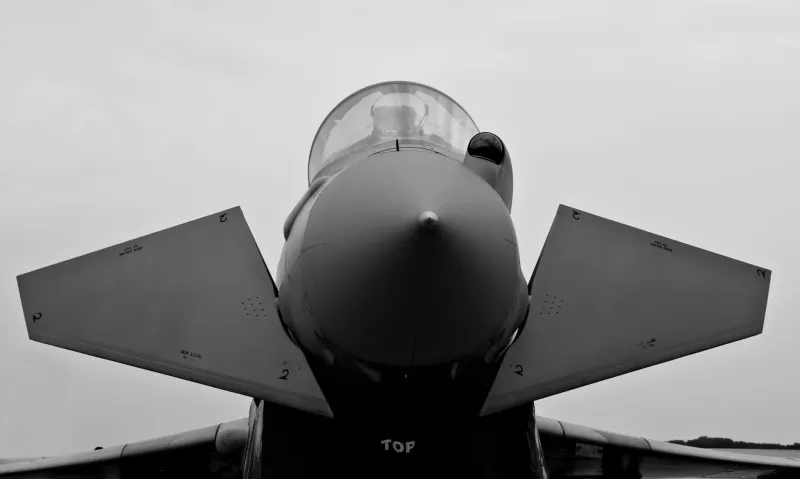
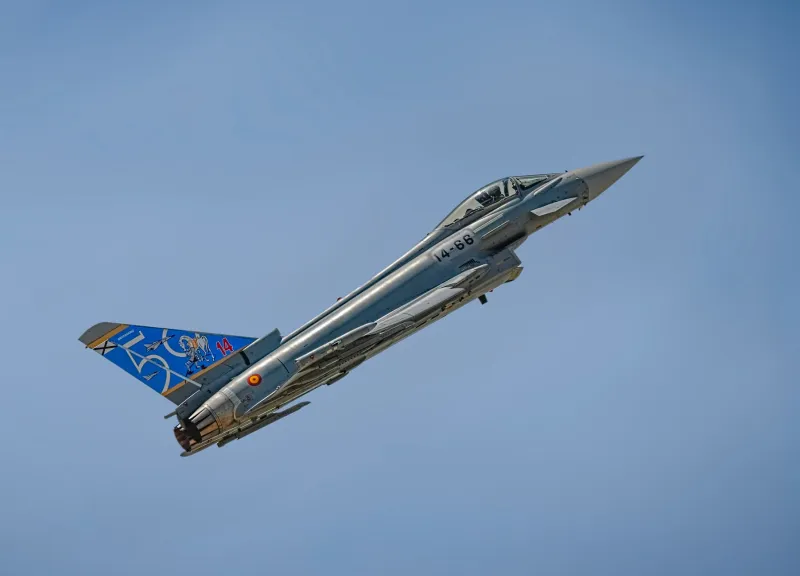
The Eurofighter Typhoon's journey into RAF service is perhaps the most instructive case study in the complexities of multinational procurement. Conceived during the Cold War as a dedicated air superiority platform, the Typhoon entered RAF service in 2003 — but in a form so stripped of its intended capabilities that it was, for several years, incapable of dropping a single weapon in anger.
The phased approach to capability insertion, whilst fiscally manageable in isolation, created a prolonged period during which the RAF operated a front-line aircraft that could not perform front-line tasks. Tornado GR4 squadrons bore the brunt of expeditionary tasking throughout the mid-2000s, even as the Typhoon consumed an ever-growing share of the equipment budget. The reputational and operational costs of this gap were significant.
Yet the Typhoon story also illustrates the value of persistence. By the time the platform reached Phase 3 Enhancement standard, it had matured into one of the world's premier multi-role fighters — a fact demonstrated during operations over Libya, Iraq, and Syria. The aircraft's ongoing upgrade path, including the integration of the Meteor beyond-visual-range missile and ECRS Mk2 radar, ensures it will remain a credible capability well into the 2030s.
The Typhoon experience reinforced a principle that procurement officials now articulate with greater regularity: the total cost of a platform transition must account not merely for acquisition and sustainment, but for the capability voids that arise during the transition itself.
The Tornado's Retirement: Getting It Right
If the Harrier withdrawal represented a procurement low point, the retirement of the Tornado GR4 in 2019 offered a more measured model. The RAF managed the drawdown carefully, ensuring that the F-35B and Typhoon fleets had reached sufficient maturity to absorb the Tornado's ground attack and suppression of enemy air defences roles before the older aircraft departed. Aircrew were transitioned in structured cohorts, institutional knowledge was documented and transferred, and the operational calendar was adjusted to minimise exposure during the handover period.
The Tornado's retirement was not without sentiment — the type had served the RAF for nearly four decades — but it was executed with a professionalism that contrasted sharply with earlier transitions. Defence commentators noted that the lessons of the Harrier debacle had, at least in part, been absorbed.
Implications for FCAS and Future Procurement
Britain is now engaged in its most consequential aviation procurement programme since the Typhoon: the Future Combat Air System, developed under the Global Combat Air Programme (GCAP) in partnership with Italy and Japan. The programme encompasses not merely a sixth-generation crewed aircraft — provisionally designated Tempest — but an entire system-of-systems architecture incorporating uncrewed loyal wingmen, advanced sensors, and AI-enabled data fusion.
The historical record suggests several imperatives that planners would do well to heed. First, capability continuity must be treated as a non-negotiable constraint. The Typhoon and Harrier episodes demonstrated that allowing gaps to open between retiring and incoming platforms carries operational and reputational costs that far outweigh the short-term savings.
Second, multinational programmes introduce timeline risks that purely national endeavours do not. GCAP's trilateral structure offers industrial and financial advantages, but it also creates dependencies on partners whose domestic political and budgetary pressures may not always align with Britain's own. Robust contractual frameworks and genuine programme governance will be essential.
Third, the pace of technological change in the current threat environment — driven by advances in Chinese and Russian air defence systems — compresses the timelines within which transitions must occur. The luxury of a decade-long phased capability insertion, as seen with the Typhoon, may not be available to FCAS planners.
A Force Defined by Adaptation
The RAF's platform transitions over the past three decades tell a story not of failure, but of adaptation — sometimes painful, occasionally inspired, always instructive. The force that will operate FCAS in the 2040s will be shaped as much by the institutional memory of these transitions as by the technology itself.
Britain's air defence strategy has always been, at its core, a strategy of calculated investment under constraint. The challenge for the current generation of planners is to ensure that the lessons of the Harrier, the Typhoon, and the Tornado are not merely archived, but actively applied as the nation prepares to field the most complex and capable combat air system in its history.