Eyes Without Borders: The RAF's Intelligence and Surveillance Aircraft Quietly Redefining Modern Conflict
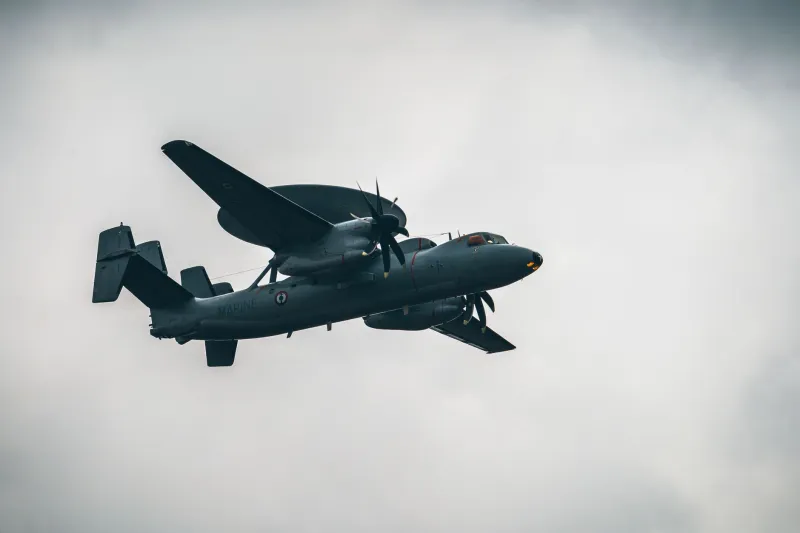
There is a particular kind of discipline required to conduct warfare from a distance — not the distance of a stand-off missile, but the intellectual and emotional distance demanded of those who watch, listen, and analyse before the first shot is ever fired. Within the Royal Air Force, this discipline belongs to the men and women who crew and support the service's Intelligence, Surveillance, and Reconnaissance fleet: a collection of platforms that rarely feature in recruitment campaigns but whose contributions to UK and allied operations are, by almost any measure, profound.
The Architecture of Awareness
The RAF's ISR capability rests on a small but remarkably capable collection of specialist aircraft. The RC-135W Rivet Joint, operated by 51 Squadron from RAF Waddington in Lincolnshire, is the crown jewel of British signals intelligence. Derived from the same Boeing airframe as the C-135 family, the Rivet Joint is a sophisticated airborne collection platform capable of intercepting and geo-locating electronic emissions across an enormous range of frequencies. Its crews — a blend of pilots, electronic warfare officers, and specialist ground-trained analysts known as Ravens — are among the most highly trained personnel in the RAF.
Complementing the Rivet Joint is the Shadow R1, operated by 14 Squadron and optimised for the collection of imagery and signals intelligence in the medium-altitude tactical environment. Where the Rivet Joint excels at the strategic and operational level, the Shadow R1 has proven its worth in counter-insurgency and irregular warfare contexts — most notably during operations in Afghanistan and, more recently, in support of coalition efforts across the Middle East and Sahel regions.
Together, these platforms form what defence analysts describe as a layered ISR architecture: a system in which strategic, operational, and tactical intelligence feeds are fused to provide commanders with a level of situational awareness that would have been unimaginable a generation ago.
The Human Dimension
What distinguishes RAF ISR operations from many other military disciplines is the extraordinary premium placed on the development of individual expertise. A Rivet Joint mission specialist may spend years developing proficiency in a narrow but enormously consequential domain — the ability to distinguish meaningful signals from electronic noise, to identify patterns of behaviour that indicate hostile intent, and to translate raw data into actionable intelligence under time pressure.
Former RAF ISR personnel who have spoken to defence publications describe a culture that values intellectual rigour and analytical precision as highly as any flying skill. The selection and training pipeline for specialist ISR roles is lengthy and demanding, drawing candidates from across the armed forces and, in some cases, from the civilian intelligence community. Retention of experienced personnel presents a persistent challenge: the skills developed within the RAF's ISR community are highly transferable to the private sector, and competition for talent is fierce.
This human dimension is frequently overlooked in public discussion of ISR capability, which tends to focus on platforms and sensors. Yet those familiar with the community are consistent in their assessment: the aircraft are the vessel, but the people are the capability.
Shaping NATO Strategy From the Cockpit
The operational significance of RAF ISR assets extends well beyond purely national interests. Britain's Rivet Joint fleet operates in close coordination with American RC-135 assets and with allied intelligence agencies through established NATO information-sharing frameworks. During periods of heightened tension — such as the sustained Russian military activity that preceded and followed the invasion of Ukraine in 2022 — RAF ISR platforms have flown extensive missions over the Baltic and Black Sea regions, contributing to the alliance's common intelligence picture.
Defence analysts with knowledge of these operations have noted that the RAF's ISR contribution carries a diplomatic weight that is disproportionate to the size of the fleet. Participation in allied collection operations signals commitment, builds interoperability, and grants the United Kingdom a seat at intelligence-sharing tables that might otherwise be less accessible. In an era of peer-state competition — in which Russia and China are investing heavily in electronic warfare and anti-access capabilities — the ability to penetrate and characterise those environments is of the highest strategic value.
The Shadow R1's contribution, whilst less prominent at the strategic level, has been equally significant in shaping tactical and operational outcomes. The platform's involvement in counter-terrorism and counter-insurgency operations has provided ground commanders with persistent intelligence that has directly informed targeting decisions, route clearance operations, and force protection measures. Its crews operate under conditions of considerable operational sensitivity, and the full scope of their activities remains, necessarily, outside the public domain.
The Emerging Challenge of Contested Environments
The ISR community faces a threat environment that is evolving with unsettling speed. Adversaries have invested substantially in long-range air defence systems, electronic warfare capabilities, and counter-ISR measures specifically designed to deny or degrade the kind of persistent surveillance that platforms like the Rivet Joint and Shadow R1 provide. Operating in permissive airspace — the default environment for much of the post-Cold War period — is no longer an assumption that planners can take for granted.
This reality is driving investment in a new generation of ISR capabilities, including uncrewed systems capable of operating in higher-threat environments without placing aircrew at risk. The RAF is actively exploring how uncrewed ISR platforms can complement and eventually extend the reach of its crewed fleet, though the integration of human judgement and machine collection at scale remains an unsolved challenge.
For the personnel currently serving in the ISR community, the transition to a more contested operating environment represents both a professional challenge and a training imperative. The skills required to conduct effective ISR in a denied or degraded environment differ substantially from those honed during a generation of operations against non-state actors. Exercises designed to replicate peer-state electronic warfare environments are becoming an increasingly prominent feature of the ISR training calendar.
A Quiet Indispensability
The RAF's ISR operators will never headline an airshow or feature prominently in a recruiting poster. Their aircraft are unglamorous by the standards of fast-jet aviation, their missions classified by necessity, and their contributions visible only in the downstream effects — the operations that succeed, the threats that are anticipated, the decisions that are made with confidence rather than uncertainty.
Yet within the walls of Waddington and the broader intelligence community, their indispensability is well understood. In an era defined by information as the decisive currency of conflict, the quiet professionals who crew Britain's surveillance aircraft are, in a very real sense, on the front line — even when they are thousands of feet above it.