Tempest Rising: Britain's Sixth-Generation Fighter and the Battle for European Air Superiority
When the model of a sleek, tailless combat aircraft was unveiled at the Farnborough Airshow in July 2018, it signalled a statement of intent from the United Kingdom that reverberated through defence ministries across Europe and beyond. The aircraft — designated the Tempest, a name that consciously echoes one of the RAF's most celebrated Second World War fighters — was presented as Britain's vision for the future of air combat. Six years on, that vision has evolved into the Global Combat Air Programme, or GCAP, a trilateral partnership between the United Kingdom, Italy, and Japan that is now one of the most strategically significant defence collaborations in the world.
What is GCAP, and Why Does It Matter?
GCAP emerged from the convergence of two parallel national programmes: the UK's Team Tempest initiative, led by BAE Systems in partnership with Rolls-Royce, Leonardo UK, and MBDA; and Japan's F-X programme, which sought a replacement for its ageing fleet of Mitsubishi F-2 fighters. Italy, operating within its own future air combat requirements through the FCAS(T) programme, joined as the third partner, bringing Leonardo's considerable sensor and avionics expertise to the consortium.
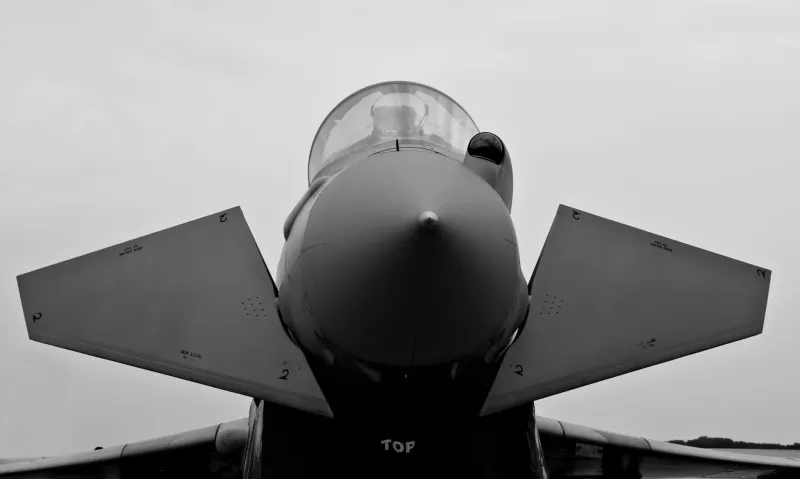
The resulting trilateral agreement, formalised in December 2022, established a framework for joint development of a sixth-generation combat aircraft intended to enter service with the RAF and its partner air forces around 2035. The aircraft is expected to replace the Eurofighter Typhoon in RAF service, a platform that itself represents one of Europe's most capable fourth-generation fighters but which will face increasing obsolescence as adversary air defence systems and combat aircraft continue to evolve.
The significance of GCAP extends well beyond the technical specifications of the aircraft itself. For the United Kingdom, it represents a post-Brexit assertion of defence industrial relevance — a demonstration that Britain retains both the ambition and the capability to lead a major international programme without the institutional framework of the European Union. For Japan, it marks a historic shift in defence posture, reflecting Tokyo's growing willingness to engage in collaborative weapons development with Western partners. For Italy, it provides a pathway to a next-generation capability whilst retaining a meaningful share of the industrial work.
Technological Ambitions: What Will Tempest Actually Do?
The technical ambitions associated with GCAP are considerable, and in several respects represent a qualitative leap beyond the capabilities of current in-service aircraft. The programme's architects have described an aircraft that will operate not merely as a crewed fighter but as the central node of a broader combat system — a concept frequently described as 'system of systems' architecture.
Key amongst the envisaged capabilities is the integration of artificial intelligence to assist the pilot in managing the vast quantities of sensor data that a modern combat environment generates. Unlike current platforms, where the pilot must manually process and prioritise information from radar, electronic warfare systems, and datalinks, the Tempest's AI-assisted cockpit is intended to present a synthesised, prioritised picture that reduces cognitive load and accelerates decision-making. In an environment where the speed of engagement may be measured in seconds, this capability could prove decisive.
The aircraft is also expected to operate in conjunction with uncrewed loyal wingman platforms — autonomous or semi-autonomous aircraft that can be directed by the Tempest pilot to conduct tasks ranging from electronic warfare and reconnaissance to direct engagement of threats. This collaborative combat concept fundamentally changes the calculus of a fighter engagement, potentially allowing a single crewed aircraft to extend its influence across a far wider battlespace than any previous platform.
Propulsion is another area of significant innovation. Rolls-Royce is developing a new powerplant — the EJ200's successor — that is expected to incorporate advanced thermal management systems, enabling higher power outputs whilst managing the heat signatures that increasingly sophisticated infrared search and track systems exploit. Stealth characteristics, whilst not publicly specified in detail, are understood to be a central design consideration, with the aircraft's geometry and materials science contributing to a reduced radar cross-section across a broad range of frequencies.
The Strategic Context: Why Now?
The urgency behind GCAP is inseparable from the broader strategic environment in which the RAF operates. Russia's full-scale invasion of Ukraine in February 2022 fundamentally altered the threat calculus for European NATO members, demonstrating that high-intensity state-on-state conflict remains a genuine possibility on the continent. Simultaneously, China's sustained investment in advanced combat aviation — including the J-20 and the more recently observed J-35 — has accelerated concerns about the long-term viability of current Western air superiority platforms in a high-end conflict scenario.
The Typhoon, for all its capability, was designed in an era when the principal threats it was expected to face were considerably less sophisticated than those now emerging. A sixth-generation platform, with the sensor fusion, electronic warfare capability, and AI-assisted decision-making that GCAP promises, is assessed by defence planners as necessary to maintain the qualitative edge that has historically underpinned Western air power doctrine.
Britain's decision to pursue GCAP rather than join the Franco-German Future Combat Air System — the other major European sixth-generation programme — reflects both political realities following Brexit and a genuine divergence in industrial and capability priorities. The FCAS programme, led by Dassault and Airbus, has faced its own considerable political and industrial tensions, and the two programmes now represent competing visions for the future of European combat aviation.
Industrial Opportunity and Export Potential
Beyond its operational significance for the RAF, GCAP carries substantial implications for the British defence industrial base. BAE Systems, Rolls-Royce, Leonardo UK, and MBDA collectively represent tens of thousands of highly skilled jobs across the United Kingdom, concentrated in regions including Lancashire, Bristol, and Edinburgh. The programme is expected to sustain and expand this workforce over the coming decades, with the development and production phases generating significant economic activity.
The export dimension is equally compelling. A successful sixth-generation aircraft, developed with Japan and Italy, would be positioned for sale to a range of allied nations whose current fleets will require replacement in the 2030s and 2040s. Countries operating the F-16 and early Eurofighter variants represent a substantial potential market, and a competitive GCAP offering could establish Britain as a leading defence technology exporter in a sector where the competition — primarily from the United States — is formidable.
Timeline and Challenges Ahead
The 2035 in-service date, whilst publicly stated as the programme's target, is widely acknowledged within the defence community as an ambitious objective. Sixth-generation aircraft development is an undertaking of extraordinary complexity, and the trilateral nature of GCAP introduces additional coordination challenges that purely national programmes do not face. Workshare negotiations, technology transfer sensitivities, and the differing operational requirements of three distinct air forces all represent potential sources of delay.
Nevertheless, the programme retains strong political support in all three partner nations, and the industrial consortia involved have demonstrated a capacity for sustained collaboration through the Eurofighter programme's long history. The first flight of a demonstrator aircraft is anticipated before the end of the decade, a milestone that will provide the clearest indication yet of whether GCAP's considerable ambitions are being translated into aeronautical reality.
Britain's Bet on the Future
The Global Combat Air Programme is, at its core, a statement about the kind of nation Britain intends to be in the mid-twenty-first century: a country with the industrial depth, the engineering talent, and the strategic vision to lead rather than follow in the development of the technologies that will define future warfare. Whether GCAP delivers on its promise will depend on sustained political will, disciplined programme management, and the continued excellence of the British aerospace industry. The RAF, and the nation it serves, has a considerable stake in the outcome.