Hearing the Fault: How RAF Acoustic Engineers Keep Aircraft Flying Through the Science of Sound
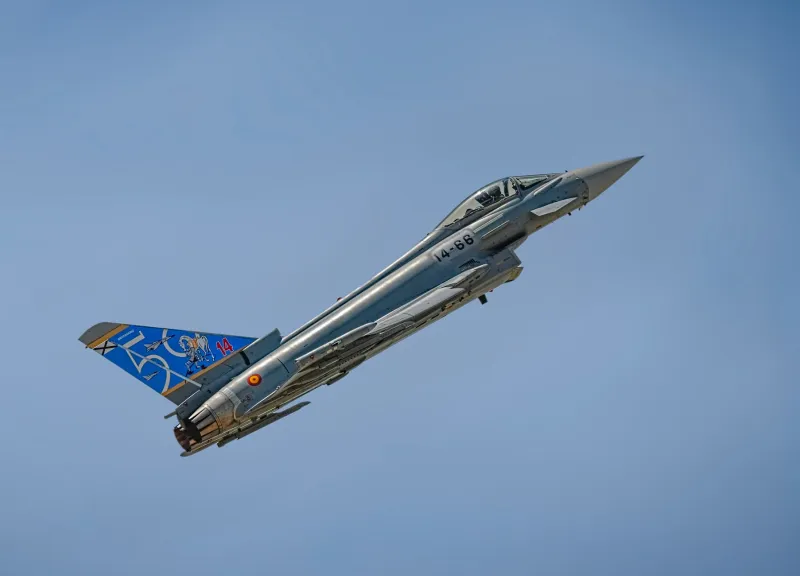
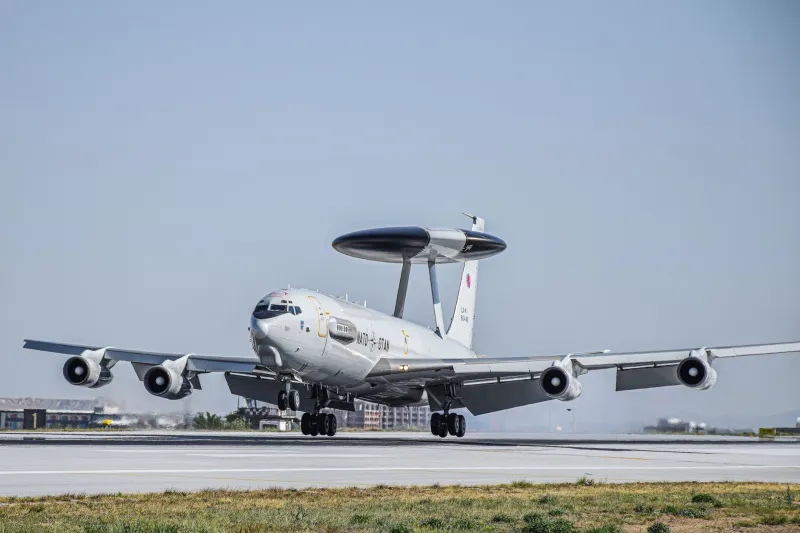
There is a moment, familiar to every experienced RAF acoustic engineer, when a particular frequency emerges from the noise — a subtle deviation from what ought to be there, a vibration that sits slightly wrong in the data stream or, in some cases, perceptible even to the trained ear. For most observers standing on a flight line, the thundering departure of a Typhoon or a Atlas transport is simply noise. For this small community of specialists, it is information.
Acoustic diagnostics and vibration analysis occupy a niche but critically important corner of RAF maintenance culture. As fast jets and transport aircraft grow increasingly sophisticated, the science of listening to machinery has evolved in parallel — transforming from rudimentary mechanic's intuition into a rigorous, data-driven discipline that is now embedded within the RAF's broader predictive maintenance strategy.
From Intuition to Instrumentation
The roots of acoustic engineering in aviation maintenance stretch back decades. Early aircraft technicians would press a screwdriver handle to an engine casing and hold the other end to their ear — a crude stethoscope that nonetheless revealed bearing wear, imbalance, or lubrication failures invisible to the eye. That tradition of listening has never disappeared; it has simply been refined beyond recognition.
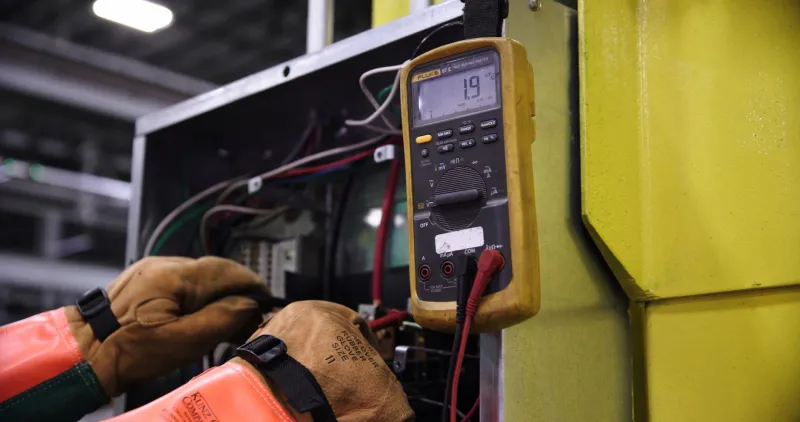
Modern RAF acoustic engineers work with an array of tools that would have seemed extraordinary even twenty years ago. Accelerometers mounted at precise locations across airframes capture vibration signatures during ground runs and flight operations. Microphones positioned within engine nacelles record acoustic data across a wide frequency spectrum. Sophisticated software then processes this information against baseline models, flagging deviations that warrant closer inspection.
Yet technology alone does not define the discipline. Senior engineers within the RAF's technical wings speak of an interpretive skill that develops over years of exposure — an ability to contextualise raw data against operational history, environmental variables, and the specific quirks of individual airframes. "Every aircraft has its own personality," one experienced technician explained during a recent visit to a frontline station. "You get to know them, and when something changes, you feel it before the system necessarily flags it."
The Science of Predictive Maintenance
The RAF's investment in acoustic and vibration diagnostics is inseparable from its broader shift towards condition-based maintenance — a philosophy that prioritises intervention at the point of need rather than on rigid scheduled timelines. For a service operating complex platforms such as the F-35B Lightning, the P-8A Poseidon, and the A400M Atlas, the financial and operational implications of this approach are substantial.
Unscheduled maintenance events carry a disproportionate cost. An aircraft grounded unexpectedly disrupts operational planning, consumes engineering hours at premium rates, and in worst-case scenarios can compromise mission readiness at precisely the moment when availability matters most. Acoustic diagnostics, by detecting anomalies in their earliest stages, allow maintenance teams to schedule interventions during planned downtime — preserving both the aircraft and the programme.
The specific signatures that acoustic engineers monitor vary considerably by platform and component. Compressor blade erosion in a turbofan engine produces characteristic high-frequency tones. Bearing degradation in gearboxes generates distinctive harmonic patterns. Structural fatigue in airframe joints can manifest as micro-vibrations during specific flight regimes. Each signature requires a different analytical approach, and the library of known fault patterns that experienced engineers carry — mentally and digitally — is vast.
Listening to the Lightning
The introduction of the F-35B Lightning II into RAF service brought with it an entirely new set of acoustic challenges. The aircraft's Rolls-Royce LiftSystem, which provides the vertical thrust capability essential to carrier operations, produces a vibration and acoustic environment unlike anything previously encountered in British military aviation. Engineers tasked with monitoring the health of this system required dedicated training programmes and a period of operational data gathering before reliable baseline models could be established.
The Lightning's integrated health management system — known within the programme as the Autonomic Logistics Information System, or ALIS, latterly transitioning to the Operational Data Integrated Network — gathers enormous volumes of sensor data during every flight. Acoustic engineers work alongside data analysts to interpret this information, correlating in-flight readings with post-sortie inspections and building an ever-richer picture of how individual aircraft age and respond to operational stress.
This collaboration between human expertise and automated data systems represents the current frontier of the discipline. The engineers are not being replaced by algorithms; rather, they are becoming interpreters of data at a scale and sophistication that human perception alone could never achieve.
Training the Ear and the Mind
Becoming proficient in acoustic diagnostics is not a matter of attending a single course. The RAF's technical training pipeline introduces the concepts at foundation level, but genuine expertise accumulates over years of hands-on exposure across multiple platforms. Many of the most respected practitioners in this field have worked on three or four different aircraft types, each experience adding new reference points to their diagnostic repertoire.
Formal training has nevertheless grown more structured as the discipline has matured. Specialist modules covering vibration analysis, signal processing, and the interpretation of spectral data are now incorporated within advanced engineering qualifications. Civilian industry partnerships — particularly with engine manufacturers such as Rolls-Royce and airframe contractors — have brought additional depth to the curriculum, drawing on commercial aviation's longer history with condition-monitoring programmes.
There is also a mentorship dimension that formal training cannot fully replicate. Younger engineers describe the experience of working alongside veterans who can identify an anomaly in a ground-run recording before the analysis software has completed its processing. This transfer of tacit knowledge — the accumulated pattern recognition of years spent listening to aircraft — remains one of the most valuable and difficult-to-quantify assets within the RAF's engineering community.
A Discipline Whose Time Has Come
As the RAF prepares to introduce further advanced platforms over the coming decade, including the eventual arrival of the GCAP next-generation fighter, the importance of acoustic and vibration diagnostics is only set to grow. More complex propulsion systems, advanced composite structures with different failure modes, and increasingly dense sensor architectures will all demand greater analytical sophistication from the engineers charged with keeping aircraft serviceable.
There is a quiet pride among those who practise this discipline — an awareness that their work, largely invisible to the public and even to many within the broader service, sits at the intersection of scientific rigour and hard-won practical wisdom. The aircraft that departs on a combat air patrol or a humanitarian mission does so in part because someone, somewhere, listened carefully enough to know that it was ready.
In an age of artificial intelligence, autonomous systems, and digital twin modelling, the human capacity to hear meaning in complexity remains, for now, irreplaceable. The RAF's acoustic engineers would not have it any other way.