Breaking the Silence: Confronting the Psychological Cost of Fast Jet Operations in the Modern RAF
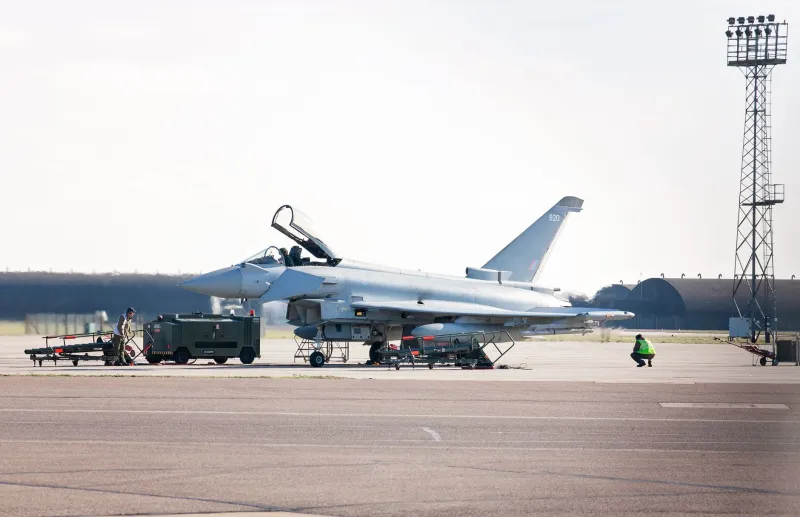
There is a particular mythology that surrounds the fast jet pilot — a figure of controlled aggression, technical mastery, and emotional resilience. It is a mythology that the RAF has, at various points in its history, actively cultivated. The image served a purpose: it attracted a certain kind of recruit, sustained morale in conditions of extreme danger, and projected a confidence that adversaries were meant to find discouraging. But myths, however useful, carry costs. And the cost of this particular one — the idea that psychological vulnerability is incompatible with operational effectiveness — has been paid quietly, and often privately, by the men and women who have flown fast jets in Britain's name.
The Weight That Doesn't Show on the Forms
Operational stress in military aviation takes many forms. There is the acute pressure of the mission itself — the compressed decision-making, the physical demands of high-g manoeuvring, the proximity of lethal systems. There is the cumulative fatigue of sustained deployments, irregular schedules, and the persistent background awareness of risk. And there is something harder to name: the psychological residue of having participated in operations where people died, whether adversaries, civilians caught in the margins of conflict, or colleagues lost to accident or enemy action.
The RAF has been operationally active for the entirety of the careers of pilots currently in service. From Iraq and Afghanistan to Libya and Syria, British fast jet aircrew have conducted thousands of strike missions, many of them in circumstances that required split-second judgements about the use of lethal force. The psychological consequences of those judgements — the replaying of decisions, the questioning of outcomes, what clinicians sometimes describe as moral injury — are not uniformly distributed, and they do not always manifest immediately.
Speaking to former Tornado and Typhoon pilots, a consistent picture emerges: the culture of the fast jet world, for much of the past two decades, actively discouraged any disclosure of psychological difficulty. "You didn't talk about it," one former squadron leader, who served multiple tours over Afghanistan, told RAF Infos. "Not to your flight commander, not to the medical officer, certainly not to your peers. There was an unspoken understanding that if you raised your hand, your flying would be scrutinised differently. The career implications felt real, even if nobody ever said it explicitly."
Stigma and Its Structural Roots
The stigma surrounding mental health in the RAF pilot community is not simply a matter of individual attitudes. It has structural dimensions that any honest assessment must acknowledge. The selection and training pipeline for fast jet pilots is extraordinarily competitive and lengthy. Candidates invest years of their lives in reaching the front line, and the prospect of losing their flying category — the formal designation that permits them to operate specific aircraft types — as a consequence of seeking psychological support has historically represented a genuine deterrent.
The Armed Forces' occupational health framework requires medical officers to balance individual welfare against operational fitness, and the judgements involved are genuinely difficult. A pilot who is struggling psychologically may pose a safety risk to themselves and others; the system's caution in this regard is not without foundation. But the consequence of this caution, in practice, has been that many aircrew have preferred to manage their difficulties privately rather than risk the professional consequences of disclosure.
Research published by King's College London's King's Centre for Military Health Research has documented elevated rates of post-traumatic stress, depression, and alcohol misuse among UK military personnel who have served in operational theatres. Fast jet aircrew are not immune to these patterns, and there is growing evidence that the specific nature of precision strike operations — the intimacy of targeting, the visibility of effects — creates psychological risks that differ qualitatively from those experienced by ground forces.
What Is Changing
The RAF has, in recent years, moved with increasing deliberateness to address the stigma surrounding mental health. The introduction of the Trauma Risk Management (TRiM) peer support programme — originally developed by the Royal Marines and subsequently adopted across the armed forces — has created a framework for normalising conversations about psychological difficulty in operational settings. TRiM is explicitly not a clinical intervention; it is a structured peer-to-peer process designed to identify individuals who may be struggling and to connect them with appropriate support without requiring them to self-identify to a medical authority.
The RAF's Directorate of Mental Health has also expanded its outreach to flying squadrons, working to build relationships between clinical staff and aircrew communities before crises occur rather than only in response to them. This shift — from reactive to preventive — is philosophically significant, even if its practical effects are still working their way through the system.
Perhaps most importantly, a generational shift appears to be under way in how younger aircrew relate to discussions of psychological wellbeing. Several serving pilots, speaking on background, described a noticeably different atmosphere in their current squadrons compared to the environment they encountered as junior officers. "It's not that it's easy to talk about," one current Typhoon pilot observed. "But there's less of a sense that it ends your career if you do. People are more willing to say they're having a difficult time."
The Limits of Cultural Change
For all the genuine progress, significant challenges remain. Cultural change in an institution as hierarchical and tradition-bound as the RAF is inevitably uneven. The shift in attitude visible in some squadrons is not uniformly distributed across the service, and the structural factors that have historically discouraged disclosure — the career implications of a lost flying category, the competitive nature of the pilot community — have not been entirely removed.
There is also a question about the adequacy of the support available to those who do come forward. Military mental health services in the UK have faced sustained pressure, and waiting times for specialist support have been a recurring concern. The Ministry of Defence has committed additional funding to mental health provision in recent years, but demand has grown alongside awareness, and the gap between need and provision has not been fully closed.
Former aircrew, who no longer face the professional constraints of serving personnel, often present a more candid picture of the system's limitations. Several veterans spoken to for this article described periods of significant psychological difficulty that they managed largely without formal support, either because they did not feel able to access it while serving or because they did not recognise the nature of their difficulties until after they had left the service. The transition to civilian life, which removes the structure and identity that military service provides, can itself precipitate a psychological crisis in individuals who appeared to be coping adequately while in uniform.
A Reckoning in Progress
The RAF is not unique among military organisations in grappling with these challenges. Virtually every air force that has conducted sustained combat operations over the past two decades is confronting similar questions about the psychological cost of modern air warfare and the adequacy of its response. What distinguishes the current moment is the combination of accumulated evidence, changing social attitudes, and a generation of aircrew who are less willing than their predecessors to absorb that cost in silence.
The service's willingness to engage openly with these issues — to acknowledge that operational effectiveness and psychological wellbeing are not in opposition but are, in the long run, mutually dependent — represents genuine institutional maturation. Whether that maturation is proceeding quickly enough, and whether the structural changes required to make disclosure genuinely safe are being implemented with sufficient urgency, are questions that remain live.
For those who have flown in Britain's name and carried the weight of it home, the answer to those questions is not abstract. It is the difference between a service that stands behind its people when the mission is over, and one that merely expects them to stand down quietly and get on with it.