Spanners Before Degrees: Why Britain's Brightest Young Engineers Are Swapping Lecture Halls for RAF Hangars

For the better part of a generation, the assumption has held firm across Britain's schools and careers offices: the surest route to a professional engineering career runs through a university. Collect your A-levels, secure a UCAS offer, accumulate roughly £50,000 in student debt, and emerge three or four years later clutching a degree and, if fortune obliges, a graduate scheme placement. It is a well-worn path — but it is no longer the only one that leads somewhere worth going.
The Royal Air Force has quietly been building an alternative. Through a suite of apprenticeship and advanced technical training programmes, the service is recruiting school leavers directly into the engineering workforce, equipping them with qualifications that rival — and in certain respects exceed — what a civilian university delivers, and doing so while paying them a wage throughout. The results are attracting attention not only from prospective recruits but from employers and policymakers watching Britain's aerospace talent pipeline with mounting concern.
The Architecture of the Programme
The RAF's engineering apprenticeship offer operates at several levels, accommodating candidates from GCSE standard through to those holding A-levels or equivalent qualifications. At its core is the Aircraft Engineering Technician apprenticeship, a structured programme typically spanning three to four years that combines on-the-job training at operational RAF stations with formal technical education delivered through the RAF's own training establishments, principally RAF Cosford in Shropshire.
Apprentices — known within the service as Apprentice Technicians — spend their early months at RAF Halton undertaking initial military training before progressing to trade-specific instruction. The curriculum encompasses airframe and propulsion systems, avionics, weapons engineering, and the increasingly critical domain of digital systems maintenance. Upon completion, successful candidates hold a Level 3 qualification equivalent to two A-levels, alongside military-recognised trade qualifications that carry genuine weight within the broader aerospace sector.
For those entering with stronger academic credentials, the Advanced Apprenticeship and higher-level technical routes offer progression towards Foundation Degree and HNC equivalencies, with further opportunities to pursue full degree-level qualifications through partnerships with civilian universities — without pausing employment or incurring additional debt.
The Financial Calculus
The economics of the RAF route deserve scrutiny, because they represent a substantial departure from the university model. An RAF Apprentice Technician begins earning from the moment they enter training. Starting salaries sit in the region of £15,000 to £20,000 during the apprenticeship phase, rising sharply upon qualification and further still with promotion. Crucially, accommodation, meals, and healthcare are either provided or subsidised throughout.
Set against the experience of a university engineering student — who may accumulate debts exceeding £50,000 before earning a single pound in their chosen profession — the contrast is stark. Over a four-year training period, the RAF apprentice not only avoids debt accumulation but builds modest savings, accrues pension entitlement from the outset, and emerges into full employment with four years of verified, hands-on experience already on their record.
For recruits from less affluent backgrounds, this distinction is not merely financial; it is transformative. The RAF's programmes are increasingly recognised as one of the most genuinely accessible routes into high-skilled aerospace engineering, removing the socioeconomic barriers that continue to dog university participation rates in technical disciplines.
Voices from the Hangar Floor
Speak to those currently progressing through the programme and a consistent picture emerges. Many describe a moment of clarity when, having researched both routes, the RAF offer simply made more sense — not as a compromise, but as a superior proposition.
One Apprentice Technician at RAF Marham, currently working on F-35B Lightning II airframes in her second year of training, described her decision in straightforward terms. She had received a university offer to read aerospace engineering but found herself drawn by the prospect of working on operational fast jets rather than studying theoretical models of them. The financial considerations reinforced that instinct. By the time her former classmates graduate, she will be a qualified technician with two years of real-world experience on one of the most sophisticated aircraft in any air force's inventory.
Another apprentice, stationed at RAF Waddington and specialising in avionics systems, spoke of the mentorship dimension that university simply cannot replicate. Working alongside experienced Senior Aircraftsmen and Warrant Officers, he is learning not only technical procedure but professional judgement — the capacity to diagnose a fault under operational pressure, to communicate clearly up a chain of command, and to understand how individual technical decisions affect mission readiness. These are competencies that take years to develop in a civilian context. In the RAF, they are woven into the fabric of daily working life from the outset.
Reshaping the Aerospace Talent Pipeline
The broader significance of the RAF's approach extends well beyond the service itself. Britain's aerospace sector — encompassing manufacturers, MRO providers, and defence contractors — faces a well-documented skills deficit. The Royal Aeronautical Society has repeatedly flagged concerns about the pipeline of qualified technicians and engineers entering the workforce, and the decline of traditional apprenticeship culture in the post-war decades left lasting gaps that university expansion alone has not filled.
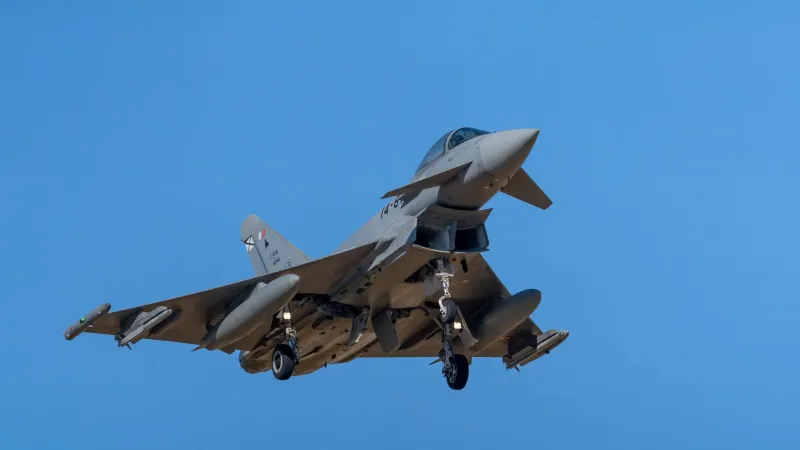
The RAF's programmes are, in effect, subsidising the development of skilled professionals who will, over the course of careers spanning two or three decades, circulate between military and civilian aerospace employment. Veterans of RAF engineering trades are consistently sought by companies including BAE Systems, Rolls-Royce, and Leonardo UK, whose recruitment teams are well aware of the standard of training the service delivers. In this respect, the RAF functions as a de facto national engineering academy — one that happens to also operate Typhoons and Poseidons.
The Ministry of Defence has recognised this dynamic and has taken steps to formalise the relationship between military training and civilian qualification frameworks. The alignment of RAF trade qualifications with national apprenticeship standards and Ofqual-regulated qualifications ensures that what apprentices earn within the service retains its value should they choose to transition to civilian employment at any stage.
The Competition with University: A Changing Conversation
For years, the conversation in sixth-form common rooms and careers fairs positioned apprenticeships as the option for those who had not quite made the grade for university. That framing is changing, and the RAF's programmes are among the factors driving the shift. When a school leaver can demonstrate that the RAF route offers equivalent or superior qualifications, guaranteed employment, no debt, and the opportunity to work on aircraft that no civilian employer can match, the university alternative requires rather more justification than it once did.
Careers advisers at schools across the country are increasingly directing high-achieving pupils towards the RAF's engineering offer — not as a fallback, but as a first choice. The service's outreach teams, working through its network of engagement with schools and Armed Forces Day events, have refined their pitch accordingly. The emphasis is no longer on military adventure alone; it is on professional excellence, technical depth, and a career architecture that delivers tangible rewards at every stage.
Britain's aerospace industry needs engineers. The RAF is producing them — on time, to specification, and without a tuition fee invoice in sight. Whether the wider education system is paying sufficient attention remains an open question, but among those who have looked closely at what the service actually offers, the answer to that question is becoming harder to ignore.