Wings Transferred: How RAF Fast Jet Pilots Are Reshaping Commercial Aviation and What Their Success Reveals About Britain's Military Training Legacy
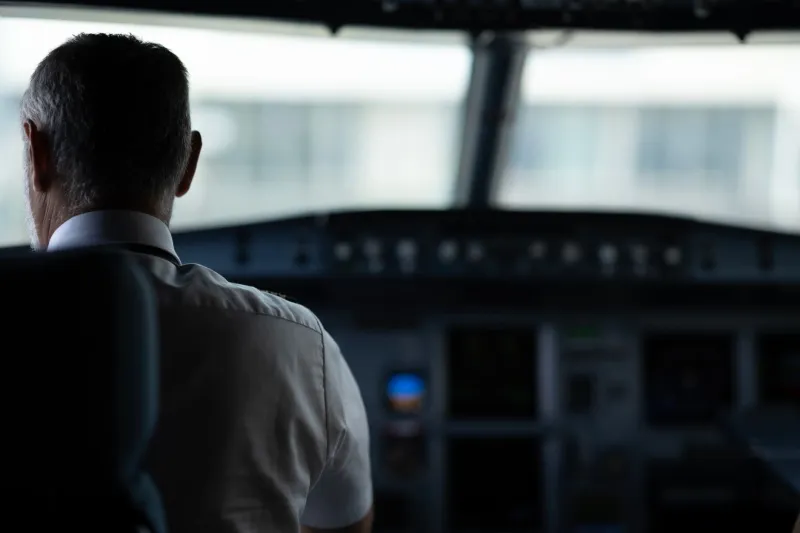
Each year, a cohort of former RAF fast jet pilots trades the cockpit of a Typhoon or Tornado for the flight deck of a commercial airliner, carrying with them a set of competencies that the airline industry quietly prizes above almost any other background. Their transition illuminates not only the personal journey of career change, but the enduring quality of a training pipeline that Britain has refined over generations. What does the civilian aviation world see in these individuals, and what does that recognition say about the RAF's approach to producing pilots?
The Pipeline That Produces Exceptional Aviators
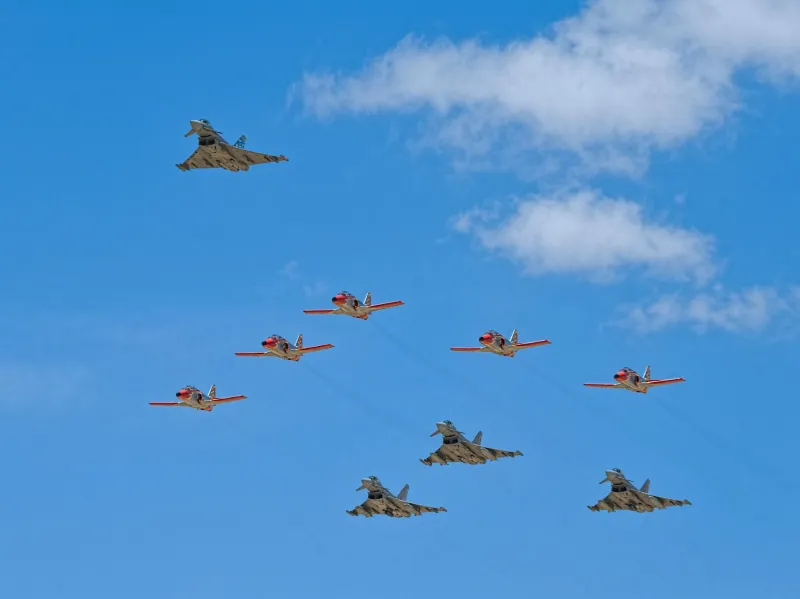
To appreciate what former RAF fast jet pilots bring to the commercial sector, one must first understand the extraordinary rigour of the training system they have passed through. The journey begins at RAF Cranwell, where officer cadets undergo initial military aviation training before progressing through the Elementary Flying Training programme. Those selected for fast jets then advance to the Hawk T2 at RAF Valley, where the demands intensify considerably. By the time a pilot has completed their Operational Conversion Unit and arrived on a front-line squadron flying the Eurofighter Typhoon, they have accumulated hundreds of hours of genuinely complex, high-stakes flying across a variety of conditions, roles, and threat environments.
This is not training designed to produce competent operators of a single aircraft type. It is a system deliberately engineered to produce adaptable, analytically rigorous aviators capable of making rapid, consequential decisions under pressure. That distinction matters enormously when those pilots eventually present themselves to airline recruitment teams.
What Airlines Are Actually Buying
Speak to any airline recruiter who has processed applications from former military fast jet pilots, and a consistent picture emerges. The qualities they identify go well beyond raw flying hours or instrument ratings. Former RAF pilots arrive with an ingrained culture of structured decision-making, a habit of conducting thorough pre-flight threat assessments, and an almost instinctive ability to manage cockpit workload during periods of high stress.
Group Captain (Retired) James Hargreaves, who flew the Tornado GR4 during Operation Shader before joining a major British carrier, describes the transition in terms of cognitive frameworks rather than stick-and-rudder skills. "The actual handling of the aircraft was never the challenge," he explains. "What the RAF had given me was a way of thinking about flight — a structured approach to risk, to communication, to contingency planning. That transferred immediately. The airline recognised it before I did."
This sentiment is echoed across the community of former military aviators now flying commercially. The RAF's emphasis on Crew Resource Management, its culture of detailed mission briefing and debriefing, and its insistence on honest post-flight analysis all map with remarkable precision onto the competency frameworks that commercial aviation regulators and airlines themselves have adopted over recent decades. In many respects, the military aviation world pioneered the cultural and procedural foundations that civil aviation subsequently formalised.
Navigating the Cultural Shift
The transition is not without its friction. The commercial cockpit is a profoundly different environment from the fast jet world, and former RAF pilots are candid about the adjustments required. The most frequently cited difference is pace. Where a Typhoon pilot might fly a demanding four-ship combat air patrol, engage in complex tactical manoeuvring, and return to base having made dozens of critical decisions across a ninety-minute sortie, the commercial flight deck demands a different kind of sustained attention — one measured in hours rather than minutes, and governed by procedures designed to minimise variation rather than exploit individual initiative.
Wing Commander (Retired) Sarah Clifton, formerly of No. 1 Squadron and now a First Officer with a regional carrier, describes this adjustment with characteristic precision. "In the RAF, you are constantly problem-solving, constantly anticipating the next threat. Commercial flying rewards consistency and procedural adherence above improvisation. Learning to value that discipline — to see it as a strength rather than a constraint — took time. But the underlying mental toolkit was the same."
There is also the question of rank culture. The RAF operates within a clearly defined hierarchical structure that, while collaborative in the cockpit, is underpinned by clear authority and formal accountability. Commercial aviation has its own hierarchy — Captain and First Officer — but the interpersonal dynamics are different, and former military pilots occasionally find themselves recalibrating their communication style to suit a civilian crew environment.
The Conversion Pathway and Its Practical Realities
For RAF pilots leaving the service, the formal route into commercial aviation typically involves obtaining an Airline Transport Pilot Licence (ATPL) through the Civil Aviation Authority. Many former military pilots are able to accelerate this process through credit for existing competencies, though the requirements are nonetheless substantial. Type rating on a specific commercial aircraft — an Airbus A320 or Boeing 737, for example — adds further cost and time, and the financial outlay during this transition period can be considerable.
Several British airlines have established formal relationships with the military transition community, recognising the value of recruiting from this pool. Organisations such as the Honourable Company of Air Pilots have long worked to smooth the pathway between military and civil aviation, providing mentorship and guidance to those navigating the conversion process. The RAF itself, through the Career Transition Partnership, offers support to service leavers, though the specific demands of pilot conversion mean that individuals must often supplement this with significant personal investment.
What This Tells Us About the RAF's Training Standards
The consistent success of former RAF fast jet pilots in commercial aviation is not coincidental. It reflects the deliberate construction of a training system that produces not merely capable military aviators, but genuinely exceptional professionals whose skills carry value far beyond the defence context. The fact that airlines actively seek out these individuals — and that those individuals consistently perform at the highest levels — constitutes an external validation of the RAF's training philosophy that no internal assessment could replicate.
This matters for several reasons beyond individual career outcomes. It reinforces the case for sustained investment in military pilot training at a time when defence budgets face persistent pressure. It demonstrates that the skills developed in the service of national defence generate broader economic and social value. And it offers a compelling counter-narrative to any suggestion that military aviation is an insular world disconnected from the wider professional landscape.
For the RAF, the success of its alumni in commercial cockpits around the world is a quiet source of institutional pride — and a powerful argument for maintaining the exacting standards that produced them in the first place. For the airlines that employ them, it is simply good business. For the travelling public, it is, perhaps, a reassurance they never knew they needed.