The Invisible Hand: How RAF Air Traffic Controllers Shape Every Mission from the Ground Up
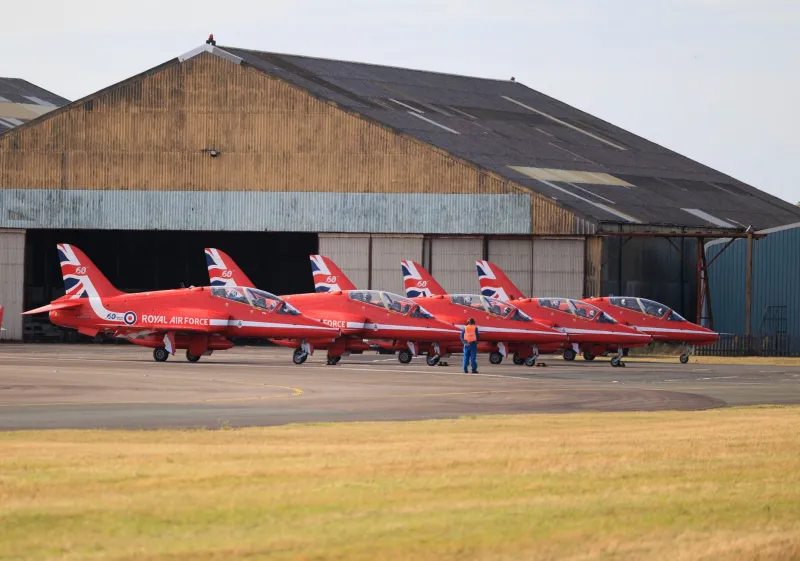
When a Typhoon FGR4 screams off the runway at RAF Coningsby and vanishes into low cloud, the pilot's trust is not placed solely in the aircraft's avionics or their own considerable skill. It rests, in no small part, in the voice on the other end of the radio — calm, precise, and entirely invisible to the outside world. RAF air traffic controllers (ATCOs) are among the most consequential professionals in the entire service, yet they receive a fraction of the recognition afforded to the aircrew they protect. That imbalance is long overdue for correction.
Authority Without Altitude
The role of an RAF ATCO is fundamentally different from its civilian counterpart at Heathrow or Gatwick, though the cognitive demands are comparable. Military controllers must manage not merely the orderly sequencing of aircraft, but the complex choreography of tactical operations — simultaneous live weapons sorties, formation recoveries in degraded weather, emergency diversions, and the ever-present requirement to coordinate with NATO allies operating under different procedures and radio protocols.
At a busy RAF station during a major exercise, a controller may be managing a dozen fast jets recovering from a simulated combat mission, a tanker holding overhead, an inbound casualty evacuation helicopter, and a visiting foreign military aircraft — all within the same block of airspace, often in instrument meteorological conditions. The mental workload is extraordinary, and the margin for error is effectively zero.
Unlike civilian controllers, their RAF counterparts may also deploy. Forward Air Controllers and deployed ATCOs have served in Afghanistan, Iraq, and across numerous overseas operations, providing air traffic services from austere airstrips and forward operating bases where the infrastructure bears no resemblance to the polished facilities back in Lincolnshire or Norfolk.
The Making of a Military Controller
Recruitment into the RAF Air Traffic Control branch begins with the standard RAF officer selection process at the Air and Space Warfare Centre's Officer and Aircrew Selection Centre at RAF Cranwell. Candidates are assessed not only on academic aptitude but on spatial reasoning, multitasking ability, and composure under pressure — qualities that cannot be taught but must be identified early.
Successful candidates proceed to specialist ATC training, which is lengthy, demanding, and structured to weed out those who cannot sustain performance under sustained cognitive load. Trainees must demonstrate competency across approach control, aerodrome control, and area control disciplines before qualifying. Validation on specific unit types — whether that is a Hawk T2 training environment at RAF Valley or a Typhoon base — adds further layers of assessed practice before a controller is considered fully operational.
The washout rate is not negligible. The RAF invests considerably in each trainee, and those who cannot demonstrate the requisite standard are removed from training — a necessary reality given the stakes involved. Those who do qualify emerge with a skill set that is genuinely rare and transferable, which creates its own set of challenges for the service.
Retention: The Quiet Crisis
The civilian aviation sector has long recognised the value of qualified military ATCOs. NATS, the UK's principal air navigation service provider, and overseas operators actively recruit former RAF controllers, offering salaries that the public sector cannot easily match. The tension between military service obligations and civilian opportunity is a persistent feature of the branch's personnel landscape.
The RAF has responded with a range of retention measures, including financial incentives and structured career development pathways that offer controllers progression into supervisory, training, and staff roles. Nevertheless, the competition for experienced personnel remains fierce, and the service must continually balance the pipeline of newly qualified controllers against the attrition of those departing for commercial roles.
This challenge is not unique to ATC — it mirrors pressures felt across numerous technically specialised RAF branches — but it carries particular operational significance given how directly controller numbers affect flying programme capacity. A station unable to staff its watch adequately cannot safely sustain its flying output, regardless of how many serviceable aircraft sit on the flight line.
Technology in the Tower
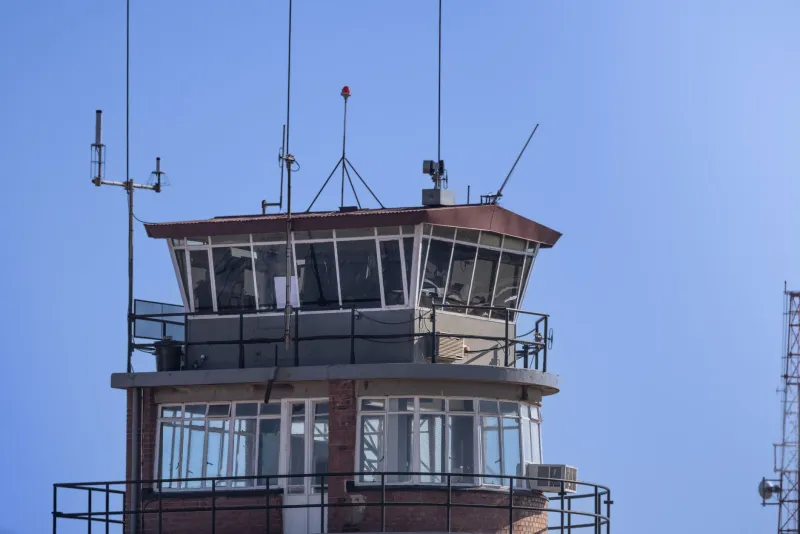
Modern RAF ATC facilities bear little resemblance to the radar rooms of a generation ago. Digital radar displays, electronic flight strips, and advanced surface movement guidance systems have replaced much of the paper-based infrastructure that once defined the trade. Ground-controlled approach systems, which allow controllers to talk pilots down through cloud to the runway threshold with extraordinary precision, have been progressively upgraded across the main operating bases.
The integration of Link 16 — the secure tactical data network used by NATO air forces — has also altered the information environment available to controllers working in joint or coalition contexts. Situational awareness has expanded considerably, though with it has come an increased requirement for controllers to synthesise greater volumes of data simultaneously.
Looking ahead, the RAF's investment in uncrewed aerial systems presents a new set of challenges for the ATC branch. Integrating Protector RG Mk1 and future autonomous platforms into controlled airspace alongside crewed fast jets requires procedural innovation and, ultimately, technological solutions that are still being developed. Controllers will be at the centre of that transition, whether they are managing it from a conventional tower or through a remote digital interface.
Unseen, Indispensable
There is a particular irony in the invisibility of RAF air traffic controllers. Every pilot who has safely recovered to base in marginal weather, every formation that has sequenced efficiently through a congested hold, every emergency that has been resolved without incident — each of these outcomes carries the fingerprints of a controller who will never appear in the squadron photograph or receive a mention in the mission debrief.
The profession demands an unusual psychological disposition: the ability to exercise significant authority without any desire for visible credit. Controllers who thrive in the role tend to find their satisfaction in the smooth, unremarkable execution of a complex task — in the fact that nothing went wrong, rather than in anything that went spectacularly right.
For those considering a career that places them at the operational heart of every RAF mission without ever leaving the ground, air traffic control represents one of the service's most demanding and most rewarding vocations. It is a profession that asks a great deal and returns relatively little in the way of public recognition — which is, perhaps, precisely why it suits the people who choose it.
The aircraft may carry the RAF's capability into the skies. But it is the controllers, steady and unseen behind their displays, who ensure it comes home.