The Backbone of the Fleet: How RAF Ground Crews Keep Britain's Air Power Ready for Anything
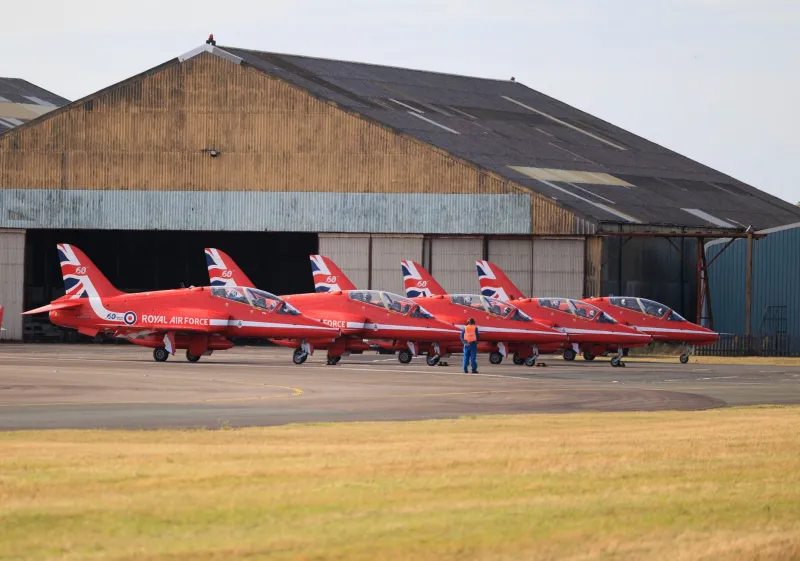
The roar of a Typhoon lifting off from RAF Coningsby is, for most observers, the defining image of British air power. Cameras track the aircraft as it climbs, and headlines follow the pilot's name. But long before that jet reached the runway, and long after it returns, another story is unfolding on the hardstanding — one that receives considerably less attention yet is every bit as consequential.
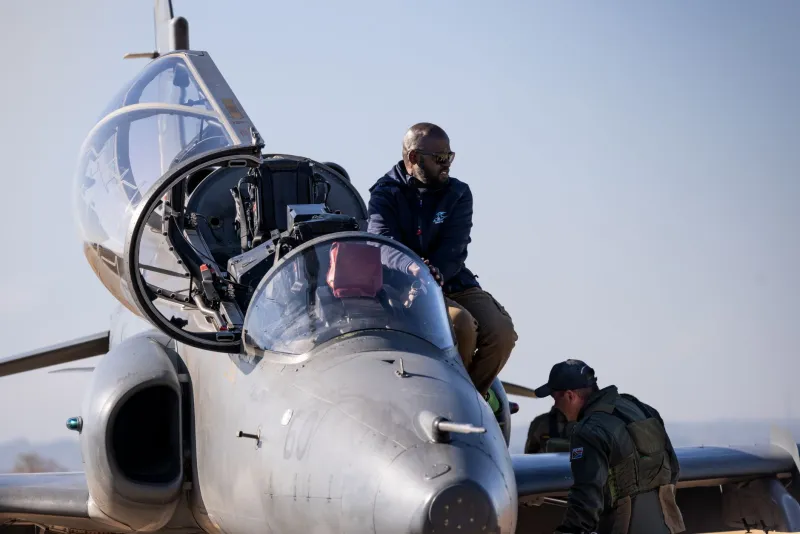
RAF ground crews are the men and women who make operational flying possible. They are not a single trade but a constellation of specialisations, each indispensable, each demanding years of training and sustained technical competence. Without them, Britain's fleet does not fly. It is, in the most literal sense, as simple as that.
A World Built on Specialisation
The RAF's engineering and support trades span a remarkable breadth of disciplines. Aircraft technicians — subdivided into airframe and propulsion specialists — are responsible for the structural and mechanical integrity of every platform in the inventory. They inspect, repair, and certify aircraft for flight, working to strict airworthiness standards governed by the Military Aviation Authority.
Avionics technicians occupy a different but equally demanding niche. Modern fast jets such as the Typhoon and the F-35B are, in many respects, flying computers. Their sensor suites, communications systems, and electronic warfare capabilities are extraordinarily complex, and diagnosing faults within these systems requires both theoretical knowledge and practical intuition developed over years of hands-on experience.
Then there are the weapons technicians — perhaps the least publicly visible of all ground crew trades, yet among the most consequential. Loading and configuring weapons systems on frontline aircraft is a precise, regulated process. A single procedural error carries catastrophic potential, and the personnel who carry out this work understand that reality acutely.
Supporting all of these roles are survival equipment specialists, who maintain ejection seats and aircrew life-support systems, as well as propulsion engineers, ground support equipment operators, and the logistics and supply chain personnel who ensure the right parts arrive at the right place at the right time.
The Training Pipeline
Entry into the RAF's technical trades begins at RAF Cosford, home of the Defence College of Aeronautical Engineering. Recruits who have passed initial training and been allocated to an engineering trade arrive here for phase two training — a period that can last anywhere from several months to well over a year depending on the specialism.
The curriculum is rigorous. Trainees study not only the practical skills of their trade but also the underpinning theory — aerodynamics, electrical systems, hydraulics, and the regulatory frameworks that govern military airworthiness. Passing out from Cosford does not, however, mark the end of the learning process. It marks the beginning of a career defined by continuous professional development.
Upon posting to a frontline or training squadron, newly qualified technicians are supervised closely as they work towards their aircraft-specific authorisations. Each authorisation permits them to carry out defined tasks on a particular platform, and building a comprehensive authorisation profile takes time and demonstrated competence. Senior technicians and warrant officers serve as the custodians of this knowledge, mentoring junior personnel and maintaining the standards on which operational safety depends.
"You never stop learning in this job," one senior aircraft technician who has served on Typhoon squadrons at both Coningsby and Lossiemouth explained. "Every aircraft has its quirks, and the platforms evolve constantly. Software updates, modification programmes, new weapons fits — you have to stay current or you become a liability rather than an asset."
Life on the Frontline
For ground crews assigned to frontline squadrons, the pace of work can be relentless. During periods of high operational tempo — exercises, deployments, or surge operations — the pressure to maintain aircraft availability is intense. The RAF measures its operational readiness in part through the proportion of its fleet that is serviceable at any given moment, and ground crews are the primary variable in that equation.
Deployments add another layer of complexity. When RAF aircraft operate from austere or expeditionary locations — whether supporting NATO commitments in Eastern Europe or conducting operations further afield — the ground crew deploys with them. Working in unfamiliar environments, often with reduced resources and under operational security constraints, demands adaptability and professional resilience.
"A deployed environment tests everything you think you know," recalled a weapons technician who served on operations in the Middle East. "You might be working in extreme heat, with limited spares, on a compressed timeline. The fundamentals don't change, but you have to apply them with a lot more creativity."
The physical demands of the role are also frequently underestimated. Ground crew work outdoors in all weathers, often at unsociable hours, in environments that can be both physically hazardous and psychologically demanding. Inspecting the underside of a Typhoon in a Scottish winter, or turning around an aircraft for a night sortie in the small hours of the morning, is not the glamorous image that recruiting posters tend to project.
Recognition and Retention
The question of retention within the RAF's technical trades has become an increasingly significant concern in recent years. Skilled avionics and aircraft technicians are highly sought after in the civilian aviation sector, where airlines and maintenance organisations offer competitive salaries and, in many cases, a more predictable work pattern. The RAF has responded with targeted financial retention packages and improved career development pathways, but the challenge of competing with commercial employers for experienced personnel remains live.
There is, however, something that the civilian sector cannot easily replicate: the sense of purpose that comes from maintaining aircraft in service of national defence. Many ground crew personnel cite this as a primary reason for remaining in uniform beyond the point at which a more lucrative civilian career might have beckoned.
"The money matters, obviously," acknowledged one avionics technician with twelve years of service. "But there's a reason I'm still here. When you know the aircraft you've signed off on is going somewhere that actually matters — that's not something you can put a salary figure on."
An Evolving Role
As the RAF's fleet continues to evolve, so too does the character of ground crew work. The introduction of the F-35B to RAF and Royal Navy service has brought with it an entirely new set of technical demands. The aircraft's integrated systems architecture and its reliance on sophisticated software mean that traditional boundaries between trades are increasingly blurred. Technicians must be conversant with digital diagnostic tools and data-driven maintenance approaches that would have been unrecognisable to their predecessors a generation ago.
Looking further ahead, the Future Combat Air System — the programme developing the next generation of RAF combat capability — will almost certainly present ground crews with challenges that are difficult to fully anticipate today. Autonomous and semi-autonomous platforms, advanced propulsion systems, and integrated electronic warfare suites will require a workforce that is as technically literate as any in the armed services.
The pilots may occupy the cockpit, but the ground crews own the aircraft. Britain's air power rests, as it always has, on the expertise and dedication of the men and women who never leave the ground.