Throttle to Throttle: The Journey RAF Combat Pilots Make When They Leave the Service
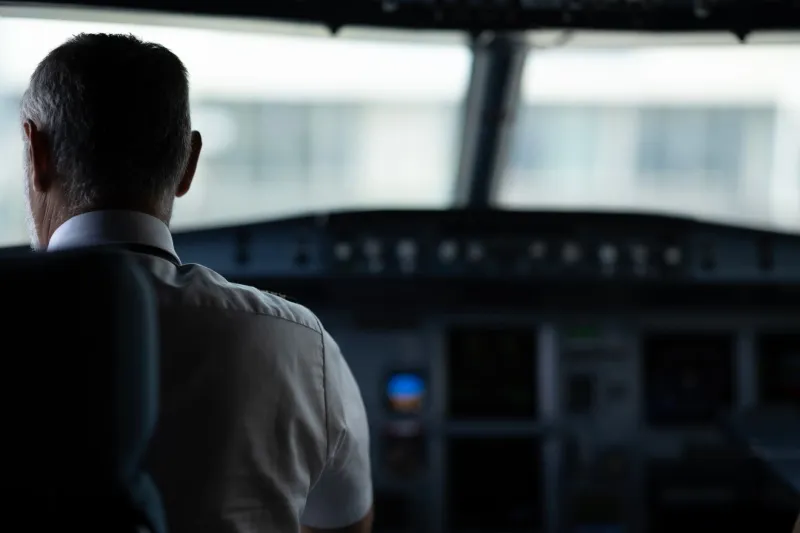
Thousands of hours in a Typhoon or Tornado cockpit represents an extraordinary foundation for a civilian aviation career — but the transition from fast jet to flight deck is rarely as straightforward as it might appear. Former RAF combat pilots describe a journey that is as much psychological as it is professional, demanding a fundamental renegotiation of identity, purpose, and ambition.
Each year, a steady stream of experienced aviators departs RAF service. Some leave after completing their initial commission; others serve for two decades or more before concluding that the time has come for a change. Whatever the timing, they carry with them a skills portfolio that civilian employers covet: exceptional airmanship, decision-making under pressure, crew resource management, and an instilled discipline that manifests in every pre-flight check and every radio call. The question is not whether those skills are valuable. It is how best to translate them into a new context — and how to navigate the considerable personal adjustment that accompanies the process.
What the Airlines Are Looking For
The major British carriers — British Airways, easyJet, Ryanair, and Virgin Atlantic among them — have long recognised the RAF as a productive recruiting ground. Military pilots arrive with Airline Transport Pilot Licence conversions already underway, instrument ratings current, and multi-crew experience that many civilian ab initio graduates cannot match. The structured airmanship instilled through RAF training aligns naturally with the standard operating procedures that govern commercial flight operations.
Wing Commander (Retired) James Carver, who flew Tornado GR4 with IX Squadron before leaving the service in 2018 and subsequently joining a major European carrier as a First Officer, described the technical adjustment as manageable. "The aircraft is obviously different — more automated, different performance envelope — but the fundamentals are the fundamentals. What took adjustment was the culture. In the RAF, every flight has a defined mission. In commercial aviation, the mission is the schedule. That sounds trivial, but it took me longer than I expected to make peace with it."
Carver's observation is widely echoed among former RAF aviators. The purposeful, operationally-focused culture of military service creates expectations that the commercial environment does not always fulfil. An airline First Officer who spent a decade flying combat missions in Afghanistan does not always find deep satisfaction in the Gatwick to Malaga rotation, however professionally demanding it may be from a technical standpoint.
The Type Rating Hurdle
One practical obstacle that many former RAF pilots encounter is the cost and complexity of obtaining civilian type ratings. While the RAF provides an outstanding grounding in airmanship, it does not automatically confer the specific aircraft qualifications that airlines require. A type rating on an Airbus A320 or Boeing 737 — the workhorses of European short-haul operations — typically costs between £20,000 and £30,000 when obtained privately, representing a significant financial commitment for someone who has just left a salaried service role.
Several organisations have emerged to bridge this gap. The Officers' Association and the Career Transition Partnership both provide guidance and, in some cases, financial support for service leavers pursuing aviation qualifications. A number of airlines have also established direct-entry schemes specifically targeting military pilots, offering sponsored type rating programmes in exchange for commitment to a defined period of service with the carrier.
Flight Lieutenant (Retired) Priya Mehta, a former Typhoon pilot who transitioned to commercial aviation in 2021, described the Career Transition Partnership as "genuinely useful" in helping her to navigate the qualification landscape. "There is a lot of noise out there about different pathways and different qualifications. Having someone who understands both the military and the civilian side cut through that was invaluable."
Beyond the Airlines: Defence and Industry
Not every former RAF combat pilot gravitates toward commercial aviation. The defence industry — encompassing prime contractors such as BAE Systems, Leonardo, and Babcock, as well as a growing ecosystem of smaller defence technology firms — actively recruits experienced military aviators for roles that leverage their operational knowledge.
Test pilot positions at Boscombe Down, the home of the Aircraft Test and Evaluation Centre, represent perhaps the most technically demanding of these opportunities. Former fast jet pilots who have completed the Empire Test Pilots' School course at Boscombe Down or its equivalents in the United States or France are particularly sought after for roles that require both flying skill and the ability to articulate aircraft behaviour in precise, technically rigorous terms.
Other former pilots find rewarding careers in defence consultancy, providing the kind of operational perspective that no amount of engineering expertise can substitute. A contractor advising on the integration of a new weapons system benefits enormously from access to someone who has actually employed such systems under operational conditions — and the RAF's recent operational history in Libya, Iraq, and Syria has produced a generation of pilots with directly relevant experience.
The Psychological Dimension
Perhaps the least discussed but most significant aspect of the transition is the psychological adjustment it demands. RAF identity runs deep. The service provides structure, community, purpose, and a clearly defined professional role that many veterans find genuinely difficult to replicate in civilian life. The loss of that structure — even when the individual has actively chosen to leave — can produce a disorientation that manifests as anxiety, restlessness, or a persistent sense that something important is missing.
Dr. Helen Marsh, a psychologist who works with the Veterans' Mental Health and Wellbeing Service and has experience supporting service leavers in aviation careers, described the phenomenon as "occupational bereavement." "These individuals have often defined themselves through their role as RAF pilots for the entirety of their adult lives," she explained. "Leaving the service is not just a career change. It is, in a very real sense, a change in who they understand themselves to be."
The most successful transitions, she suggested, tend to involve deliberate effort to build new professional identities before leaving service — through mentoring relationships with former colleagues who have already made the journey, through civilian qualifications obtained while still serving, and through honest reflection on what motivates them beyond the thrill of the fast jet cockpit.
A Community of Shared Experience
Fortunately, former RAF pilots are not navigating this transition in isolation. The RAF Benevolent Fund, the RAF Association, and numerous informal networks of service leavers provide support, advice, and — perhaps most importantly — a sense of continued belonging to a community defined by shared experience. Online forums and LinkedIn groups connecting former military aviators with civilian counterparts have proliferated in recent years, creating informal mentoring ecosystems that complement the formal support structures.
The journey from fast jet to flight deck — or to test pilot, or defence consultant, or airline captain — is rarely linear and rarely without its moments of doubt. But for the men and women who have spent their careers mastering one of the most demanding professional disciplines on earth, it is a journey that their training has, in most respects, already prepared them to complete.