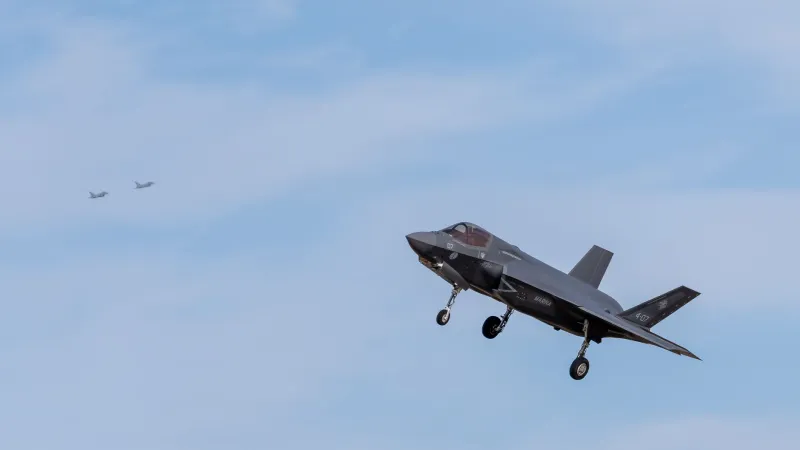
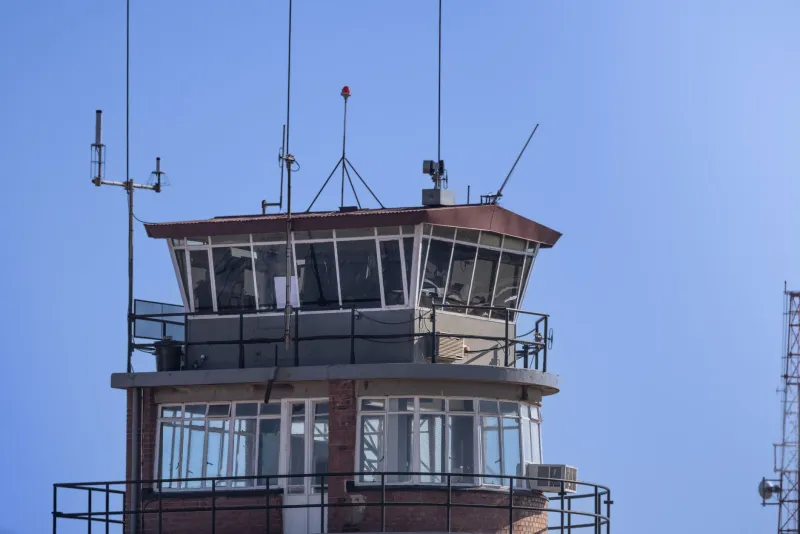
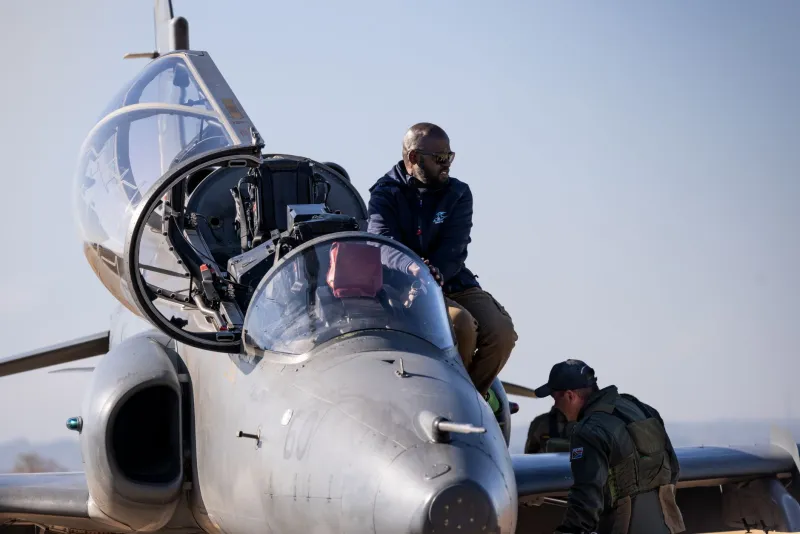
Forged in Fire: How Three Decades of RAF Combat Operations Have Rewritten NATO's Air Power Playbook
There is a particular kind of institutional knowledge that no simulation can fully replicate. It accumulates in the debrief rooms of forward operating bases, in the after-action reports filed under pressure, and in the quiet conversations between aircrew who have flown missions where the consequences of error are final. For the Royal Air Force, this knowledge — gathered across three decades of sustained operational deployment — has become one of Britain's most consequential contributions to the NATO alliance.
From the opening salvos of Operation Granby in 1991 to the intelligence-sharing frameworks shaped by Russia's full-scale invasion of Ukraine, the RAF has occupied a unique position: a medium-sized air force with a disproportionately large operational footprint, whose combat experience has repeatedly fed back into the doctrinal frameworks governing how Western nations plan and execute air campaigns.
The Gulf War as Classroom
Desert Storm was, in many respects, a formative shock for the RAF. The service entered the conflict with aircraft and tactics that had been honed for a Cold War confrontation over central Europe — a very different operational environment from the vast, contested airspace above Iraq. The early losses of Tornado GR1 crews conducting low-level attacks against hardened airfields forced a rapid, painful reassessment of risk calculus at altitude, threat layering, and the limitations of legacy precision-guided munitions.
What followed was not merely a tactical adjustment. The lessons extracted from Gulf operations were systematically fed into the RAF's doctrinal development process, influencing everything from the procurement priorities that would eventually produce the Storm Shadow cruise missile to the way targeting cells are structured within combined air operations centres. Senior RAF officers who flew Tornados over Iraq in 1991 would, years later, find themselves shaping training syllabi that encoded those lessons into the professional formation of an entirely new generation of aircrew.
"The Gulf taught us that the threat environment evolves faster than procurement cycles," one former RAF Tornado navigator, now involved in doctrine development, has noted. "The answer was to build agility into how we learn, not just into the platforms."
Afghanistan and the Complexity of Persistent Operations
If Desert Storm was the RAF's introduction to high-intensity joint warfare in the modern era, the long campaign in Afghanistan provided something altogether more nuanced: the experience of sustained, persistent air operations in support of ground forces operating under complex rules of engagement, in terrain that punished imprecision and rewarded patience.
The deployment of RAF Harrier GR9s and later Tornado GR4s over Helmand province generated an enormous body of operational learning around close air support, intelligence-surveillance-reconnaissance integration, and the human dimensions of targeting. The RAF's Reaper remotely piloted aircraft force, which grew substantially during the Afghan campaign, introduced an entirely new set of doctrinal questions — around crew fatigue in geographically separated operations, sensor exploitation, and the legal frameworks governing the use of lethal force at distance.
These questions did not remain confined to internal RAF deliberations. Through NATO's operational structures and bilateral relationships with the United States, Australian, and Canadian air forces, British doctrinal thinking on persistent ISR and precision strike was shared, debated, and in many cases adopted across the alliance. The RAF's Joint Terminal Attack Controller community, developed and refined under fire in Afghanistan, became a model that several NATO partners subsequently sought to emulate.
Syria, Libya, and the Return of Contested Airspace
The interventions in Libya in 2011 and the sustained campaign against ISIL in Syria and Iraq from 2015 onwards presented a further evolution in the operational landscape. Here, the RAF encountered the challenge of conducting precision strikes within politically constrained environments, often in airspace shared with the forces of adversarial or unpredictable state actors.
The Syria campaign in particular generated significant doctrinal thinking around deconfliction, the management of escalation risk, and the integration of cyber and electronic warfare effects alongside kinetic action. RAF Typhoon and Tornado crews operating from Akrotiri developed procedures for operating in environments where the threat was not only from ground-based air defences but from the potential miscalculation of other aircraft in the same airspace — a complexity that Cold War doctrine had not adequately addressed.
These experiences fed directly into NATO's evolving thinking on multi-domain operations and the management of escalation in contested environments — areas that would prove acutely relevant as the strategic landscape shifted dramatically in February 2022.
Ukraine: Learning Without Flying
The war in Ukraine has presented the RAF, and the wider NATO alliance, with a different kind of doctrinal challenge. British aircraft are not flying combat missions over Ukrainian territory. Yet the RAF's contribution to understanding and responding to that conflict has been substantial, and the lessons being drawn from it are already reshaping training and doctrine.
Through intelligence-sharing mechanisms, the RAF has had access to detailed analysis of how Russian air power has performed — or frequently failed to perform — in Ukraine. The catastrophic attrition of Russian fixed-wing aircraft to man-portable air defence systems, the limitations exposed in Russian suppression of enemy air defences doctrine, and the extraordinary effectiveness of Ukrainian drone operations have all generated urgent doctrinal questions for Western air forces.
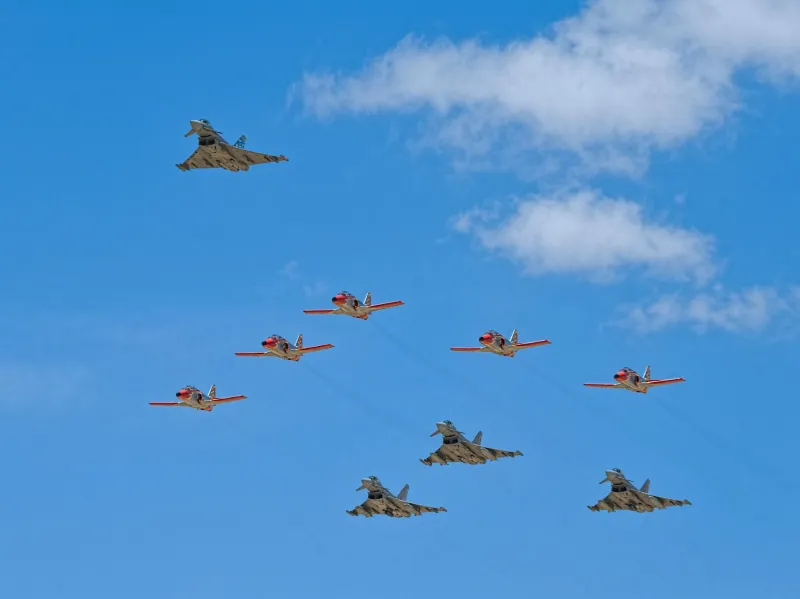
At RAF Coningsby and Lossiemouth, Typhoon crews are already training against updated threat profiles that reflect the lessons of the Ukrainian air war. The rapid proliferation of first-person-view drone threats, the demonstrated effectiveness of layered air defence, and the renewed emphasis on electronic warfare survivability have all found their way into the Typhoon force's operational training cycle with a speed that reflects the RAF's hard-won capacity for rapid doctrinal adaptation.
"Ukraine has reminded us that peer-level conflict is not a theoretical construct," a senior RAF officer involved in operational analysis observed recently. "The question is not whether we learn from it, but how quickly we can translate that learning into operational capability."
The Architecture of Doctrinal Learning
Underpinning this capacity for adaptation is an institutional architecture that has itself been refined through operational experience. The RAF's Doctrine, Concepts and Developments Group, working in conjunction with the Defence Academy at Shrivenham and the Joint Air Power Competence Centre at Kalkar in Germany, provides the formal framework through which operational lessons are assessed, codified, and disseminated across the alliance.
But the informal channels matter equally. The relationships forged between RAF officers and their counterparts in the United States Air Force, the French Armée de l'Air et de l'Espace, and the other major NATO air forces through joint exercises, exchange postings, and combined operations create the human networks through which doctrinal thinking actually travels. Britain's operational credibility — the fact that RAF aircrew have flown combat missions in every significant Western air campaign since 1991 — gives British doctrine a weight and authority within NATO councils that purely theoretical contributions could not command.
An Evolving Contribution
As the RAF looks towards a future defined by the Typhoon's continued evolution, the eventual introduction of the FCAS/Tempest sixth-generation platform, and the growing importance of uncrewed and autonomous systems, the process of converting operational experience into doctrine will only become more complex. The pace of technological change, combined with the rapidly shifting threat environment, demands an institutional learning capacity that is faster, more agile, and more deeply integrated with allied partners than at any previous point in the RAF's history.
Three decades of combat have built that capacity. The challenge now is to ensure it endures — and continues to shape not merely how Britain fights, but how the Western alliance as a whole thinks about the future of air power.