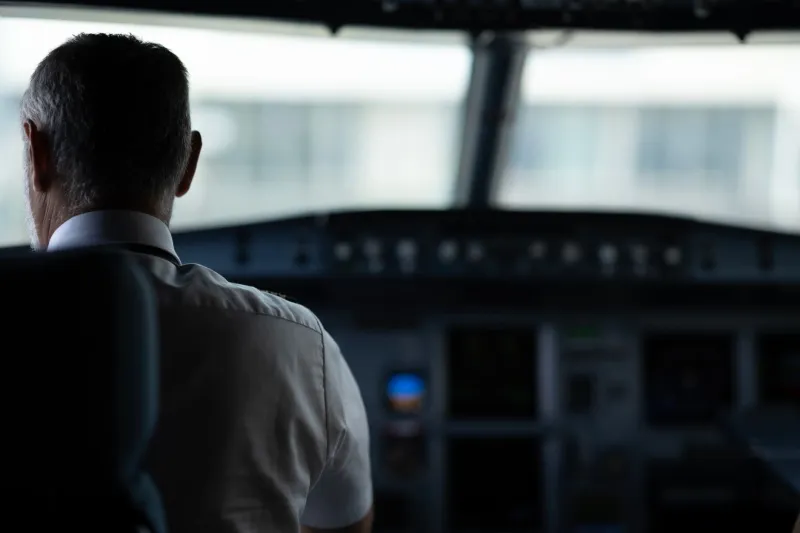
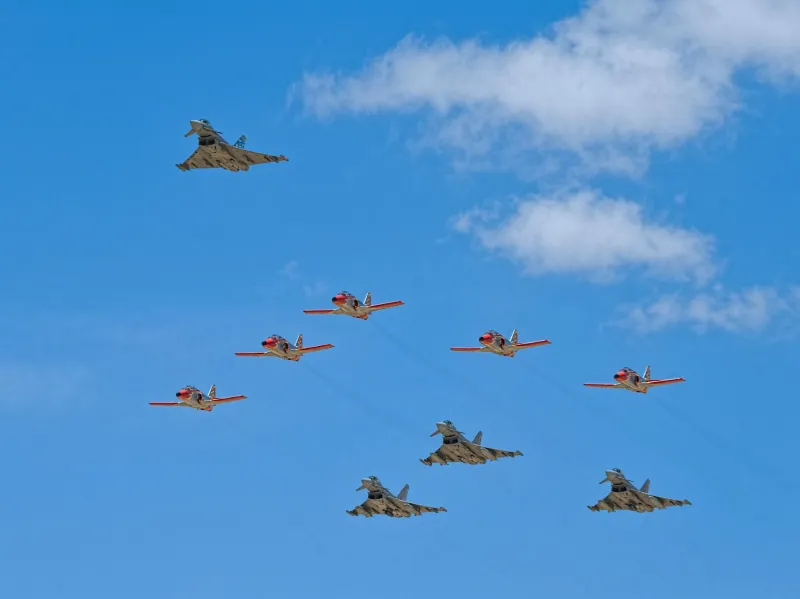
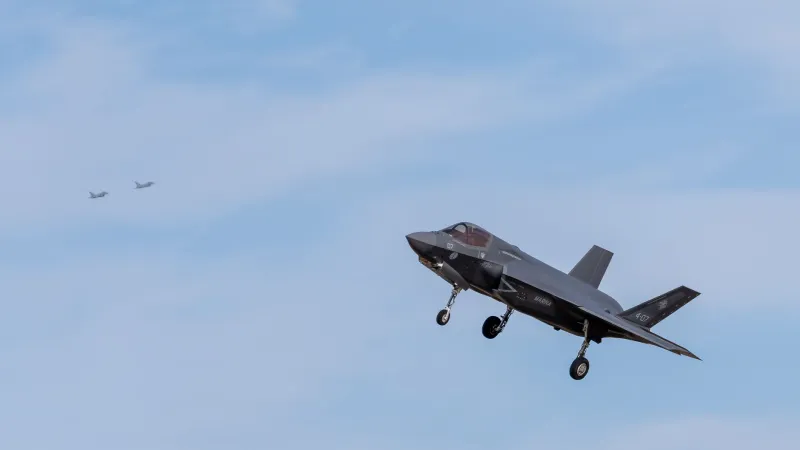
Briefing the Next Generation: How RAF Combat Pilots Are Sparking a STEM Revolution in Britain's Classrooms
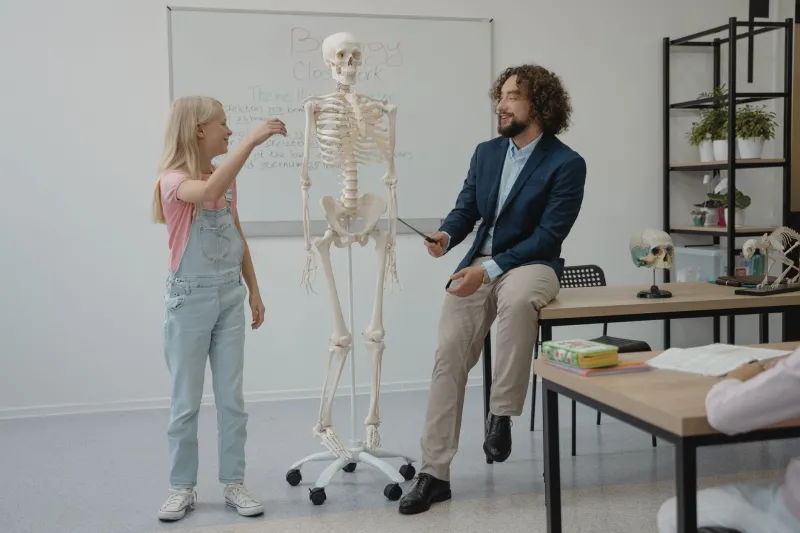
There is a particular kind of attention that descends over a school hall when a fast jet pilot walks in. It is not merely the uniform, nor even the quiet authority that comes with operational experience. It is the implicit promise that the equations on the whiteboard — the aerodynamics, the physics of thrust and drag, the mathematics of fuel consumption at altitude — are not abstract exercises. They are, quite literally, matters of life and death. That promise is the engine driving one of the RAF's most quietly ambitious educational programmes.
Across Britain's secondary schools, a cadre of serving and recently retired RAF pilots is entering classrooms not as ceremonial guests but as substantive educators. They arrive with lesson plans, real-world problem sets, and a firsthand understanding of what it means to apply scientific thinking under pressure. The initiative, developed in partnership with schools, local education authorities, and national STEM bodies, represents a deliberate effort by the RAF to invest in the very talent pool upon which Britain's future air power will ultimately depend.
Why Fighter Pilots Make Compelling Teachers
The instinct to dismiss military personnel as unsuited to educational settings misunderstands both groups. RAF pilots, particularly those with fast jet backgrounds, are among the most technically literate professionals in any field. A Typhoon pilot managing sensor fusion data, electronic warfare parameters, and weapons systems in a dynamic combat environment is, in effect, performing extraordinarily complex systems thinking in real time. That cognitive architecture, when translated into pedagogical terms, offers students something that textbooks rarely can: immediate, visceral context.
When a pilot describes calculating a minimum fuel state over hostile territory, the concept of ratio and proportion ceases to be a page in a GCSE revision guide. When they explain how a damaged hydraulic system forces rapid, sequential problem-solving at several hundred knots, the value of methodical engineering thinking becomes self-evident. Teachers who have participated in the programme have noted a measurable shift in classroom engagement, particularly among pupils who previously struggled to connect abstract curricula to tangible outcomes.
The RAF is not simply deploying personnel as motivational speakers. Structured lesson frameworks have been developed to align with national curriculum requirements, ensuring that pilots augment rather than displace formal teaching. The sessions cover topics ranging from basic aerodynamics and propulsion physics to navigation mathematics, electronic systems, and materials science — all anchored in operational scenarios that the pilots have personally encountered.
Addressing the Pipeline Problem
Britain faces a well-documented shortfall in STEM graduates entering defence-related industries. The aerospace sector, defence electronics, and advanced manufacturing all compete for a relatively narrow pool of qualified candidates. For the RAF specifically, the implications are significant. The service requires not only pilots but a vast supporting architecture of engineers, avionics technicians, software specialists, and systems analysts. If the pipeline of technically capable school leavers and graduates narrows further, the consequences for Britain's air power readiness become tangible.
The classroom programme addresses this challenge at its root. By reaching pupils at secondary school age — before many have made firm decisions about post-sixteen pathways — the RAF has an opportunity to redirect interest and ambition towards careers that might not otherwise have been considered. Crucially, the pilots themselves serve as proof of concept. They are living evidence that a passion for science and mathematics can lead not to a laboratory bench but to the cockpit of one of the world's most sophisticated combat aircraft.
Feedback gathered from participating schools suggests the approach is working. Several institutions have reported increased uptake of physics and further mathematics at A-level following pilot visits. A number of students have subsequently applied for RAF sixth-form scholarships or university bursaries. While it would be premature to draw sweeping conclusions from early data, the directional signal is encouraging.
Mentorship Beyond the Lecture
The programme extends beyond single visits. In several regions, pilots have established ongoing mentorship relationships with individual pupils, providing guidance on university applications, apprenticeship routes, and the realities of a career in aerospace. This sustained engagement distinguishes the initiative from more transactional careers outreach and reflects a broader understanding within the RAF that meaningful influence requires time and consistency.
For pupils in areas with limited exposure to high-technology industries — parts of the Midlands, the North East, and rural Scotland, for instance — the presence of an RAF mentor can be genuinely transformative. The service has been deliberate in targeting schools in communities that have historically been underrepresented in military and aerospace careers, recognising that diversity of background strengthens rather than dilutes operational capability.
Female pilots and engineers have been particularly prominent in the programme, a conscious effort to challenge persistent assumptions about who belongs in aviation and defence. The RAF's own data suggests that visible role models from similar demographic backgrounds have a disproportionately positive effect on the aspirations of young women considering STEM pathways.
The Institutional Logic
Sceptics might question whether the RAF should be investing resources in secondary school education when operational pressures remain acute. The counterargument is straightforward. An air force that fails to cultivate the talent it will need in a decade is an air force that mortgages its future capability for short-term convenience. The Tempest programme, the ongoing evolution of unmanned systems, and the increasing complexity of electronic warfare all demand a generation of technically exceptional personnel. Those personnel are currently sitting in Year 10 classrooms, deciding whether physics is worth the effort.
The RAF's classroom initiative is, in this sense, as much a strategic investment as any procurement decision. It costs relatively little in material terms. Its returns, measured in the quality of engineers and aviators who enter service over the coming decades, could be considerable.
A Blueprint Worth Watching
Other NATO allies have explored similar programmes with varying degrees of institutional commitment. The RAF's approach, distinguished by its curriculum alignment, its focus on sustained mentorship, and its deliberate reach into underserved communities, offers a model that merits broader attention. Whether the programme receives the long-term funding and structural support it requires remains to be seen. But the principle it embodies — that the men and women who fly and maintain Britain's aircraft are among the most powerful advocates for the disciplines that make aviation possible — is one the service would do well to champion at every level.
For now, in school halls from Lincolnshire to Lanarkshire, a generation of students is discovering that the science they study has wings.