The Remote Cockpit: Inside the RAF's Drone Operations and the Future of Unmanned Air Power
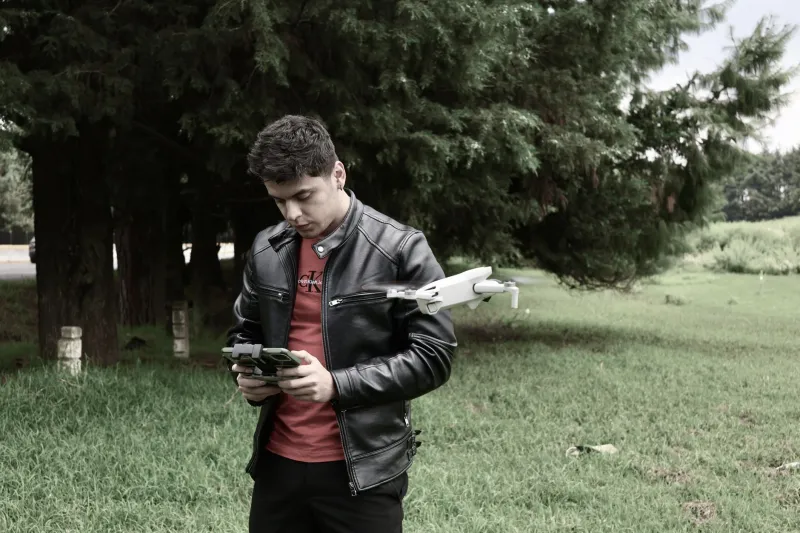
Lincolnshire is not an obvious setting for the cutting edge of modern warfare. Its flat agricultural landscape, punctuated by the occasional church spire and market town, projects an air of quiet permanence. Yet within the perimeter of RAF Waddington, the RAF operates one of the most technologically sophisticated and operationally consequential capabilities in Britain's entire defence inventory — the Remotely Piloted Aircraft System, or RPAS, programme.
Here, operators seated at ground control stations manage MQ-9 Reaper aircraft conducting live missions over territories thousands of miles distant. The physical distance between operator and aircraft is vast; the psychological proximity to the consequences of each decision is anything but.
A New Kind of Aircrew
The RAF's RPAS operators are not, as popular misconception sometimes suggests, video game enthusiasts given a military application for their hobby. They are trained aviators — many of whom hold the same wings as their fast jet counterparts — who have undergone rigorous selection, qualification, and continuation training to manage some of the most complex unmanned platforms in service anywhere in the world.
The MQ-9 Reaper, operated by 13 Squadron and 39 Squadron from Waddington, is capable of sustained flight in excess of 24 hours, carries an advanced sensor suite, and can be armed with Hellfire missiles and GBU-12 Paveway II precision-guided bombs. Managing such a platform demands a level of systems knowledge, situational awareness, and procedural discipline that rivals any crewed aircraft operation.
What distinguishes RPAS operations from conventional flying is not the complexity of the task, but its temporal and spatial dislocation. An operator may begin a shift in Lincolnshire, manage a mission over a conflict zone, and return home for dinner — a compression of experience that has no precedent in the history of air warfare.
The Cognitive Architecture of Remote Combat
The psychological demands of this operational paradigm have attracted growing academic and institutional interest. The RAF has invested significantly in understanding how its RPAS operators manage what researchers have termed 'perpetual deployment' — the condition of being simultaneously present in two entirely different realities.
Unlike aircrew who deploy to a theatre of operations and experience a clear transition between home and operational environments, RPAS operators navigate this boundary multiple times per week. The commute from the Lincolnshire countryside to a ground control station, and back again, offers little of the psychological decompression that physical distance once provided.
Former RAF RPAS operator Flight Lieutenant (Retired) Marcus Webb, now a consultant on human factors in unmanned systems, describes the challenge with characteristic precision.
"You are managing lethal force with the same cognitive apparatus you use to pick up your children from school an hour later," he explains. "The brain is not naturally equipped to compartmentalise at that speed. The RAF has developed support structures to help operators manage this transition, but it remains one of the defining challenges of the role."
The service now employs dedicated psychological support staff embedded within RPAS units, and has developed structured post-mission debrief protocols specifically designed to assist operators in processing the ethical and emotional dimensions of their work.
Ethics at Altitude — and at Distance
The ethical architecture of RPAS operations is, if anything, more demanding than that governing crewed air strikes. The persistent surveillance capability of the Reaper — its ability to observe a target for hours or days before any decision to engage is made — places operators in the unusual position of knowing their targets with an intimacy that fast jet aircrew rarely experience.
This prolonged observation does not simplify the moral calculus; in many respects, it complicates it. Operators develop a detailed understanding of the human environment surrounding a target, which can make the execution of a strike both more precise and more psychologically burdensome.
The RAF's rules of engagement, combined with the legal framework governing the use of force under international humanitarian law, impose rigorous constraints on every engagement decision. Operators work alongside intelligence analysts, legal advisers, and senior commanders in a collaborative decision-making process designed to ensure proportionality and minimise the risk of civilian casualties.
"The oversight is extraordinary," says Webb. "People imagine drone strikes as clinical and impulsive. The reality is an extensive chain of scrutiny that most conventional air operations simply cannot replicate, precisely because the platform allows for it."
Shaping NATO Doctrine from Lincolnshire
Beyond its immediate operational contribution, the RAF's RPAS programme is exerting a significant influence on how NATO allies conceptualise the future of unmanned air power. Britain has been among the most operationally experienced RPAS operators within the alliance, and the lessons accumulated by Waddington's squadrons over more than a decade of continuous operations have been fed directly into allied doctrine development.
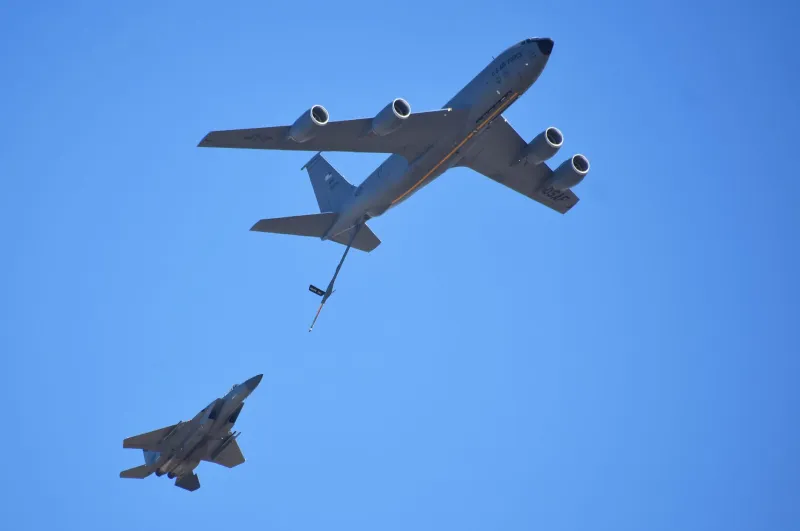
The emerging consensus within NATO is that unmanned systems will not replace crewed aircraft in the near term, but will increasingly operate as collaborative elements within mixed manned-unmanned formations. The RAF's forthcoming involvement in the Loyal Wingman concept — in which autonomous or semi-autonomous unmanned platforms operate alongside crewed fighters — draws heavily on the operational and human factors insights generated by the Reaper programme.
The Protector RG Mk1, the Reaper's designated successor, will bring enhanced capability, greater range, and improved sensor integration when it enters service. Its arrival will demand a further evolution in operator training and, inevitably, in the institutional understanding of what it means to wage war from a ground control station in the East Midlands.
A Profession Without a Template
The RAF's RPAS operators occupy a professional space without clear historical precedent. They are aviators who do not fly; warriors who do not deploy; combatants who return home each evening. The frameworks developed to support them — psychologically, ethically, and institutionally — are necessarily experimental, refined through operational experience rather than inherited from a pre-existing tradition.
What is not in doubt is their significance. As unmanned systems assume an ever-greater share of Britain's operational air power, the men and women of Waddington's RPAS squadrons are not merely conducting today's missions. They are defining the terms on which future air warfare will be understood.