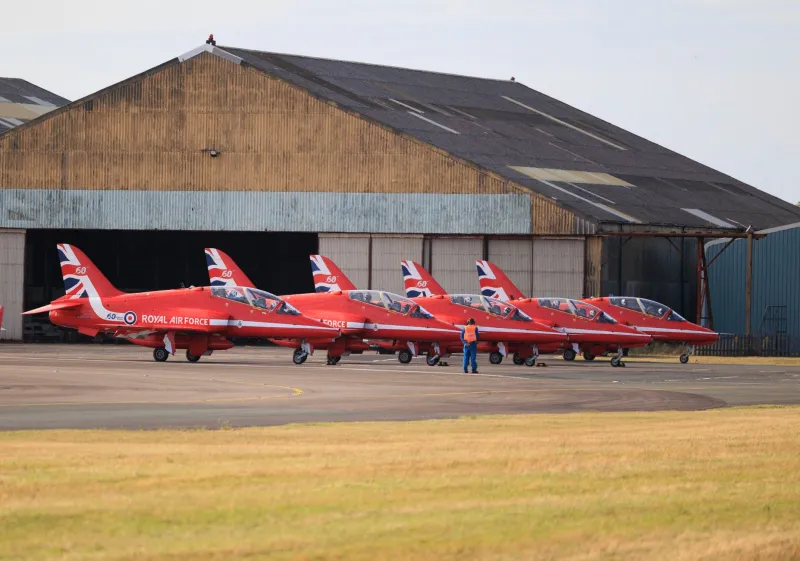
Keeping the Cold War Airborne: The Engineers Racing to Preserve Britain's Vintage RAF Fleet
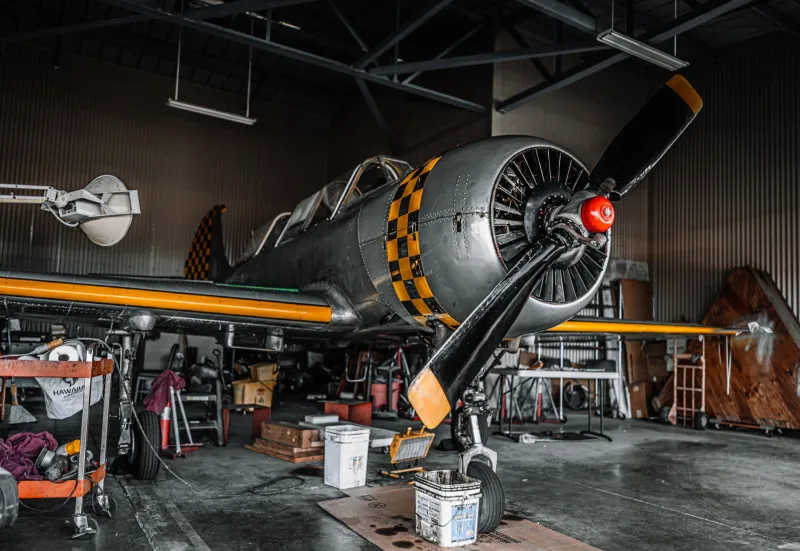
Open the cowling of a Hawker Hunter and you enter a different world — one of analogue gauges, hand-formed aluminium panels, and engineering logic that predates computerised design by decades. To the uninitiated, it is a bewildering landscape of obsolescence. To the small fraternity of engineers who have dedicated careers to keeping such aircraft flying, it is something closer to a native language, one they are acutely aware fewer and fewer people still speak.
The Irreplaceable Knowledge Problem
The challenge facing heritage aviation in Britain is not primarily financial, though funding is rarely abundant. It is epistemological. The engineers who originally designed, built, and maintained Cold War-era RAF aircraft are now in their seventies, eighties, or beyond. The knowledge they carry — the understanding of why a particular component was designed as it was, what a specific vibration pattern indicates, how a 1960s-era hydraulic system behaves when it begins to fail — exists largely in human memory rather than in any documentation accessible to the present generation.
Heritage organisations and RAF-affiliated technical teams have responded to this reality with increasing urgency. Oral history programmes, detailed technical interviews with surviving engineers, and the painstaking digitisation of original manufacturer documentation are all underway. But the process is a race, and the finishing line is biological rather than logistical.
"There are things we know about these aeroplanes that simply aren't written down anywhere," says one veteran engineer with over four decades of experience on classic British military jets. "When those of us who know them are gone, that knowledge goes with us unless we make a deliberate effort to pass it on. That effort is happening, but it needed to start twenty years ago."
Reverse-Engineering as Survival
When original components are unavailable — which, for aircraft that last entered production in the 1950s or 1960s, is increasingly the norm — heritage engineers must reverse-engineer replacements from surviving examples. This is a process that demands both technical precision and a particular kind of archaeological thinking: understanding not merely what a component does but why it was made the way it was, using the materials and manufacturing tolerances of its era.
Modern manufacturing capabilities, paradoxically, can complicate this process. Contemporary CNC machining can produce components to tolerances far tighter than the originals, which can introduce fit and function problems in systems designed to operate with looser specifications. Getting a modern part to behave like a 1963 part requires a conscious decision to replicate imprecision — a discipline that runs counter to every instinct of contemporary engineering practice.
The regulatory dimension adds further complexity. Any component fitted to a flying aircraft must satisfy airworthiness authorities, and demonstrating the equivalence of a reverse-engineered part to an original that no longer exists in certifiable condition is a documentation challenge of considerable proportions. Heritage teams have developed working relationships with the Civil Aviation Authority and, where relevant, the Military Aviation Authority to navigate these approvals, but each case remains a bespoke exercise.
The Airframes Themselves
Britain's surviving flyable Cold War fleet encompasses a remarkable range of types — from the English Electric Lightning, with its extraordinary climb performance and complex fuel systems, to the de Havilland Vampire and Venom variants that represent an earlier generation of jet technology. Each presents its own preservation profile. Some suffer from corrosion in structural members that were never designed for the storage conditions they have endured. Others have been the subject of well-intentioned but technically compromised restoration work in the past, which must now be carefully unwound.
The Lightning presents a particular case study in engineering complexity. Its stacked-engine configuration, unique in British aviation history, means that access to the lower powerplant requires the removal of the upper — a labour-intensive process that concentrates maintenance costs and demands specialist knowledge of an installation philosophy found nowhere else. The handful of Lightnings that remain in various states of airworthiness are tended by a community of engineers who have effectively formed an informal school of practice around the type.
Why It Matters Beyond Nostalgia
The case for keeping these aircraft flying is sometimes dismissed as sentiment dressed in engineering language. That characterisation misses the substantive arguments. Flyable heritage aircraft serve as living technical libraries — their systems, behaviours, and failure modes provide insights into the engineering assumptions of their era that static museum examples cannot replicate. They also serve as training environments for a style of manual, systems-aware flying that modern glass-cockpit aircraft do not demand, offering pilots an understanding of aerodynamics that simulation cannot fully substitute.
Perhaps most significantly, the engineering discipline required to keep them airworthy produces practitioners of unusual versatility. An engineer capable of reverse-engineering a Cold War fuel control unit and satisfying a modern airworthiness authority in the process has demonstrated a breadth of competence that the mainstream aerospace industry would struggle to replicate through conventional training routes.
The hangars where this work happens are quiet places, typically. The teams are small and the pace is deliberate. But what is being preserved there is not merely metal and perspex. It is a form of understanding — of how Britain once built and flew its air power — that, once lost, will not be recovered.