From Flight Deck to A&E: The Remarkable Second Acts of RAF Medical Professionals
For most people, the word 'transition' implies a gradual shift — a slow adjustment from one way of life to another. For RAF medical officers, it is rarely so gentle. One week they may be managing a hypoxic aircrew member at 30,000 feet over the North Sea; the next, they are navigating the bureaucratic corridors of an NHS trust, attempting to translate years of military clinical excellence into a language that civilian medicine understands. The journey is rarely straightforward, but its outcomes are frequently extraordinary.
Britain's RAF medical community — encompassing flight surgeons, aeromedical evacuation technicians, and forward-deployed combat medics — represents one of the most rigorously trained cohorts in UK healthcare. Yet their contribution to civilian medicine remains, to a significant degree, underappreciated and poorly understood by the broader public.
A Different Kind of Medical School
The training pipeline for an RAF medical officer bears only superficial resemblance to the path walked by a civilian GP or hospital consultant. Beyond the standard medical degree, RAF flight surgeons undertake specialist aeromedical training at the Centre of Aviation Medicine, developing expertise in altitude physiology, spatial disorientation, G-force tolerance, and the pharmacological constraints unique to aircrew. Combat medics, meanwhile, are trained to deliver advanced trauma life support in environments where the nearest hospital may be hours away by helicopter — if accessible at all.
Wing Commander (Retired) Sarah Hartley, who served as a flight surgeon with front-line fast jet squadrons before leaving the service in 2019, now leads the trauma team at a major regional hospital in the East Midlands. She describes the cognitive shift required in both directions.
"In the RAF, you make decisions with incomplete information, under time pressure, often in environments that are actively trying to kill you," she explains. "That instinct — to act decisively on the best available evidence rather than waiting for certainty — is something civilian medicine occasionally struggles with. The NHS has extraordinary depth of resource, but the culture of consensus can sometimes slow the critical moment."
Aeromedical Expertise in a Civilian World
Not all former RAF medical professionals migrate to emergency settings. A significant number find their niche in aviation medicine, working for commercial airlines, the Civil Aviation Authority, or specialist occupational health providers. Their understanding of human performance at altitude, combined with operational experience managing aircrew fitness in demanding conditions, makes them exceptionally well-suited to assessing and supporting commercial pilots.
Squadron Leader (Retired) James Okafor spent twelve years as an aeromedical officer before joining a major UK airline's occupational health division. He notes that the transition was smoother than many colleagues experienced, largely because the clinical domain remained familiar.
"The physiology doesn't change because the cockpit has a different livery on the outside," he says. "What changes is the risk environment and the regulatory framework. In the RAF, you are balancing operational necessity against medical risk in ways that the civilian world rarely encounters. That judgement — knowing when to ground someone and when to find a way to keep them flying safely — is genuinely transferable."
Okafor now advises the CAA on aeromedical certification policy, contributing directly to the regulatory standards that govern pilot health assessments across UK commercial aviation.
Trauma and the Lessons of Conflict
Perhaps the most visceral transition is that made by combat medics who have served on operational deployments in Iraq, Afghanistan, or further afield. These individuals have delivered care under fire, performed surgical interventions in field hospitals, and managed mass casualty incidents with resources that would be considered inadequate even by the most stretched NHS standards. Their arrival in civilian trauma centres frequently provokes a recalibration of what is considered possible.
Former Senior Aircraftman medic Daniel Purslow, now a paramedic with a London ambulance service, describes the cultural adjustment he encountered upon leaving the RAF.
"Civilian colleagues sometimes look at you differently when they find out where you've worked," he says. "There's respect, but also a kind of scepticism — as if military medicine is somehow separate from 'real' medicine. What I've found is that the fundamentals are identical. What differs is the context in which you apply them, and the psychological weight you carry when things go wrong far from home."
Purslow now delivers trauma training to newly qualified paramedics, drawing directly on techniques refined during multiple operational tours. His instructional approach — calm, methodical, and unsparing in its honesty about human error — has been credited by colleagues as transformative.
The Institutional Gap
Despite the evident value these professionals bring, there remains a structural gap in how the UK healthcare system identifies and absorbs former RAF medical personnel. The process of translating military qualifications into NHS-recognised credentials can be protracted and, at times, demoralising for individuals whose clinical competence is beyond question.
Several veterans spoken to for this article described the frustration of being asked to repeat basic assessments that bore little relation to the complexity of the roles they had performed in service. Advocacy groups, including the Forces in Mind Trust, have called for a more streamlined recognition pathway — one that acknowledges the exceptional breadth of experience that military medical professionals accumulate during even a modest career.
What Civilian Medicine Stands to Gain
The argument for better integration is not merely one of fairness to veterans. It is, fundamentally, an argument about improving patient outcomes. Former RAF medical professionals bring with them a set of attributes — decisive clinical judgement, composure under extreme pressure, and an instinctive grasp of resource-constrained decision-making — that are genuinely scarce in any healthcare system.
As the NHS continues to grapple with workforce shortages and the psychological toll of sustained operational pressure, the reservoir of talent represented by former RAF medics and flight surgeons deserves far greater institutional attention than it currently receives.
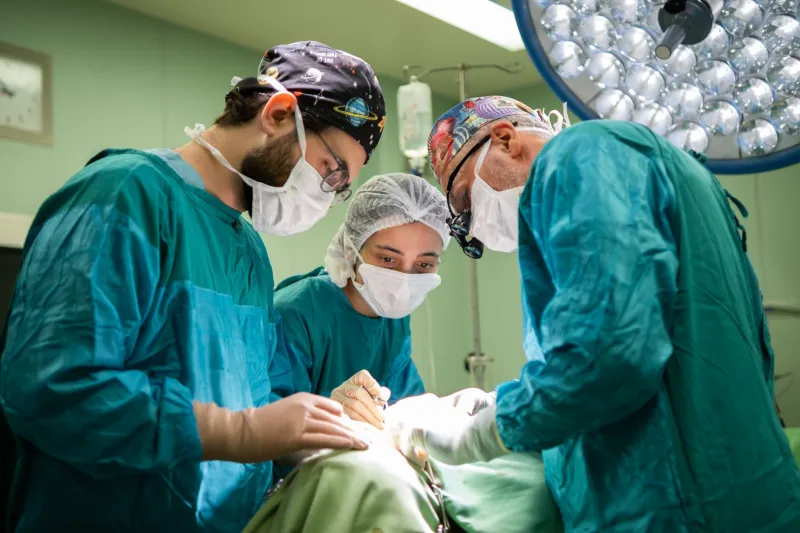
For those who have served, the transition from uniform to scrubs is rarely the end of a vocation. It is, more often, the beginning of a second chapter — one informed by experiences that no civilian training programme can replicate, and shaped by a commitment to care that the RAF instilled long before the first patient ever appeared.