The Sortie That Decides Everything: Inside the High-Stakes Evaluation Flights That Shape RAF Pilot Careers
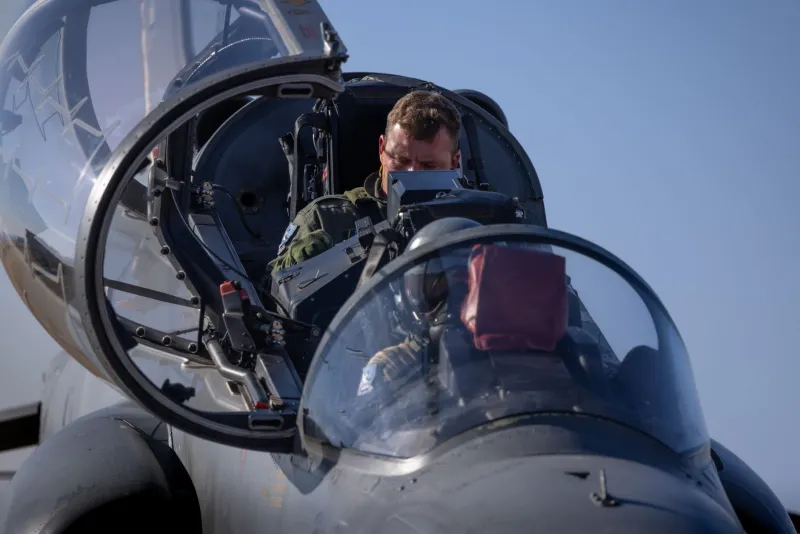
In the lexicon of RAF pilot training, the word "check" carries a specific gravity. A check ride is not merely an assessment — it is a threshold event, a point at which accumulated preparation meets live conditions and the result is recorded permanently in a career file. For some, it is the moment a long-held ambition becomes reality. For others, it is where the journey ends. Understanding why these moments carry such weight requires understanding both the system that creates them and the human beings who must perform within it.
The Pipeline and Its Pressure Points
The RAF's pilot training pipeline is a structured progression from elementary flying through to operational conversion, with formal evaluation events distributed at each stage. The first solo — achieved relatively early in basic training — is often described as the initial moment at which the stakes feel genuinely personal. Until that point, an instructor is always present, always available to intervene. The first solo removes that safety net entirely and replaces it with something more exposing: the pilot's own judgement, operating without oversight for the first time.
But it is further along the pipeline, at the fast jet and advanced training stages, that evaluation events acquire their most consequential character. The transition from advanced jet trainer to operational type is gated by a series of check rides that assess not merely flying skill but tactical awareness, crew resource management, and the capacity to perform under conditions of genuine cognitive load. These are the sorties that determine whether a pilot proceeds to a frontline fast jet role or is redirected — sometimes to multi-engine or rotary types, sometimes out of the flying branch altogether.
"The simulator builds your confidence, sometimes to a level that the real aircraft doesn't immediately support," observes a recently qualified Typhoon pilot, reflecting on the gap between synthetic and live training environments. "In the sim, you know on some level that the worst outcome is a reset. In the jet, there is no reset. That knowledge changes how you think, even when you don't want it to."
What Instructors Are Actually Watching
Experienced RAF flying instructors describe their role in check rides with a precision that reveals how far the evaluation process has evolved beyond simple skill assessment. Technical proficiency — accurate instrument flying, correct procedural execution, appropriate power management — is the baseline. It is assumed. What instructors are examining with greater attention is the quality of a candidate's decision-making under pressure: how they prioritise competing demands, how they communicate when cognitive load is high, and crucially, how they respond when something does not go as planned.
A candidate who handles an unexpected system anomaly with composure and logical troubleshooting will often receive a more favourable assessment than one who flew a technically cleaner sortie but demonstrated rigidity when the scenario deviated from expectation. The RAF's operational environment does not offer the luxury of predictable scenarios, and the evaluation system is designed to identify pilots who can function when predictability evaporates.
"We're not looking for perfection," explains a senior qualified flying instructor with experience across multiple fast jet types. "We're looking for judgement. A pilot who makes a sound decision under pressure, even if the execution isn't textbook, tells me far more about their operational potential than someone who flies a perfect profile in a benign environment."
The Psychology of the Threshold
The psychological dimension of high-stakes evaluation flying is substantial and, within the RAF, increasingly openly acknowledged. The pressure that candidates experience is not incidental to the process — it is, to a degree, the point. Operational sorties do not occur in conditions of emotional neutrality, and a training system that fails to generate meaningful pressure produces pilots who have never had to manage their own anxiety in the cockpit.
The challenge for training establishments is calibrating that pressure appropriately. Too little, and the evaluation fails to distinguish between candidates who can perform under operational conditions and those who cannot. Too much, and the system begins to filter out exactly the thoughtful, self-aware individuals who make the most effective operators. The RAF's approach has shifted noticeably in recent years toward a more structured psychological support framework — pre-sortie briefings that acknowledge the emotional reality of check rides, and post-sortie debrief processes that treat a failed evaluation as a diagnostic rather than a verdict.
For candidates who do not meet the standard on a first attempt, the path forward varies by stage and circumstance. Some are offered additional training and a subsequent opportunity. Others face redirection to alternative roles. The distinction is made on the basis of whether the shortfall reflects a correctable gap in skill or preparation, or a more fundamental mismatch between the candidate and the role. It is, by all accounts, a difficult conversation to have and a difficult one to receive.
What Survives the Moment
Pilots who have passed through the most demanding evaluation events in the RAF training pipeline describe a common aftermath: a period of recalibration in which the significance of what has just occurred takes time to resolve. The sortie itself is often described as curiously compressive — an experience that felt both prolonged and instantaneous, in which the normal relationship between time and awareness is distorted by the intensity of focus required.
What they carry forward is not merely the qualification. It is a revised understanding of their own capacity — of what they are able to produce when the environment is genuinely demanding and the margin for error is real. That knowledge, forged in the specific crucible of a career-defining sortie, shapes how they approach every mission that follows. In that sense, the check ride is not merely a gateway. It is a formative experience, one that the RAF's training system has been engineering — with considerable deliberateness — for generations.