Into the Storm: The Extraordinary Training That Prepares RAF Search and Rescue Crews for Britain's Harshest Rescues
There is a particular quality to the darkness over the Cairngorm plateau in January. The wind does not merely blow — it reorganises the world, stripping landmarks from the hillside and replacing them with a formless white confusion that defeats instruments and instinct alike. It is precisely into this environment that RAF search and rescue crews are expected to fly, locate a casualty, and return safely. The fact that they routinely succeed is a tribute not to fortune but to an exhaustive programme of preparation that begins long before any crew member sets foot in a live aircraft.
The Architecture of Readiness
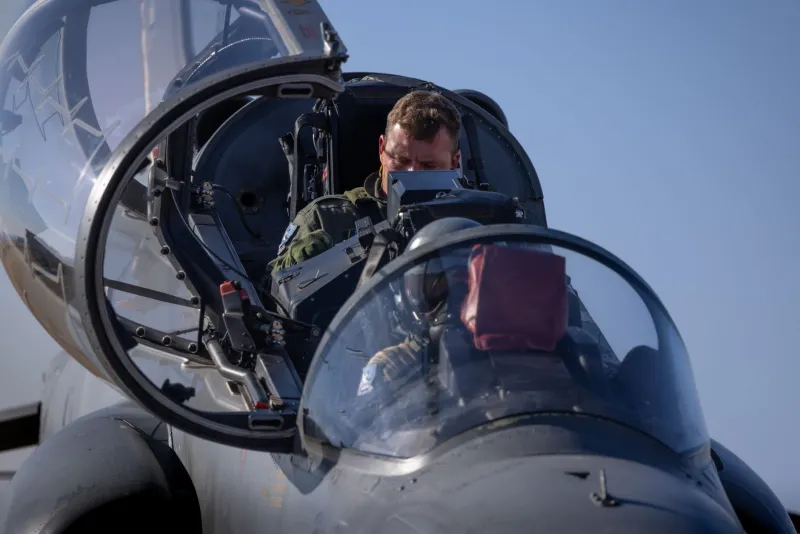
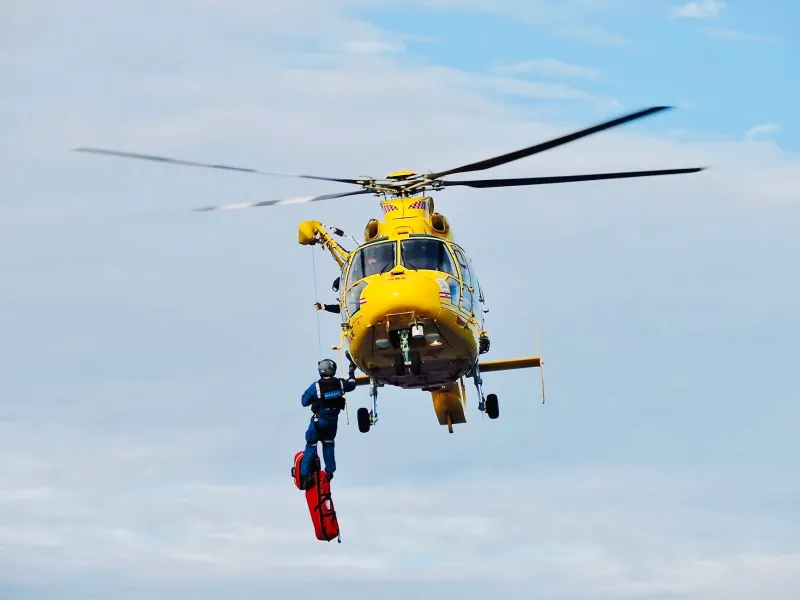
SAR training within the RAF framework is not a single course but a layered accumulation of competencies built over years. Pilots assigned to rotary-wing SAR duties first complete their advanced helicopter training before progressing to specialist conversion programmes that introduce the specific demands of rescue operations. These include confined-area landings, long-line winching, and — critically — flight in instrument meteorological conditions that would ground most civil operators without a second thought.
The psychological architecture of SAR training is equally deliberate. Crews are placed under controlled stress in simulated scenarios that replicate the ambiguity of real incidents. A mountain rescue call rarely arrives with clean coordinates and a benign weather forecast. More often, the information is partial, the terrain is hostile, and the window for action is narrowing. Instructors design exercises to force decision-making under precisely these conditions, observing not only what a crew decides but how long they take and what they discard to reach a conclusion.
"You learn very quickly that perfect information is a luxury," explains one senior RAF rotary instructor with extensive SAR experience. "We train people to act on what they have, not what they wish they had. The hesitation that comes from waiting for certainty is its own kind of risk."
Mountain, Sea, and Platform
Britain's geography presents SAR crews with three distinct operational theatres, each carrying its own hazards. The Scottish Highlands remain among the most technically demanding, combining unpredictable orographic weather, limited landing areas, and the ever-present risk of white-out conditions that can disorient even experienced aviators. Crews training for highland operations spend considerable time practising slope landings and working with mountain rescue teams on the ground, developing the mutual understanding that makes joint operations function under pressure.
The North Sea presents a different order of challenge. Oil and gas infrastructure creates a cluttered radar environment, while the sea state can transition from manageable to violent within the span of a single sortie. Winching operations above a heaving platform demand a level of spatial awareness and crew coordination that takes months to develop. The downwash from the rotors interacts unpredictably with platform superstructure, and the margin for error is measured in feet rather than metres.
Coastal waters, often overlooked in favour of the more dramatic mountain and offshore scenarios, carry their own complications. Tidal races, sea fog, and the psychological pressure of a shoreline rescue — where the casualty may be visible to onlookers and cameras — add layers of complexity that pure technical skill cannot fully address.
Regulatory Tension and Operational Reality
One of the less-discussed aspects of SAR operations is the tension between regulatory frameworks and the realities of rescue flying. Civil aviation rules that govern helicopter operations are designed for predictable commercial environments. SAR crews regularly operate at the edge of — and sometimes beyond — the parameters those rules were written to accommodate. The RAF manages this tension through a combination of military operating procedures, rigorous crew resource management training, and a culture of post-mission review that ensures lessons from edge-case decisions are captured and disseminated.
The decision to continue a sortie into deteriorating weather is never taken lightly, nor is it taken alone. Crew resource management — the structured process by which all crew members contribute to critical decisions regardless of rank — is central to RAF SAR doctrine. An experienced winchman who identifies a hazard the pilot has not registered is expected to voice that concern, and the crew culture must be robust enough to receive it without defensiveness.
The Human Dimension
Behind the technical framework are people who carry the weight of their missions long after the rotors have stopped. SAR crews describe a particular quality to rescues that succeed — a quiet satisfaction that is difficult to articulate and impossible to manufacture. They also describe, with equal candour, the ones that did not. The RAF's approach to psychological support for SAR personnel has evolved considerably over recent decades, with structured debrief processes and access to specialist support now embedded in operational culture rather than treated as an admission of weakness.
What drives individuals to this work is, by their own account, rarely the drama. Most describe a straightforward desire to be useful at the moment when usefulness matters most. The training exists to ensure that desire translates into capability — and that when the call comes in at three in the morning with a Beaufort 9 outside the window, capability is the only thing in the cockpit that counts.