Chalk and Throttle: The RAF Veterans Transforming University Flight Training Across Britain

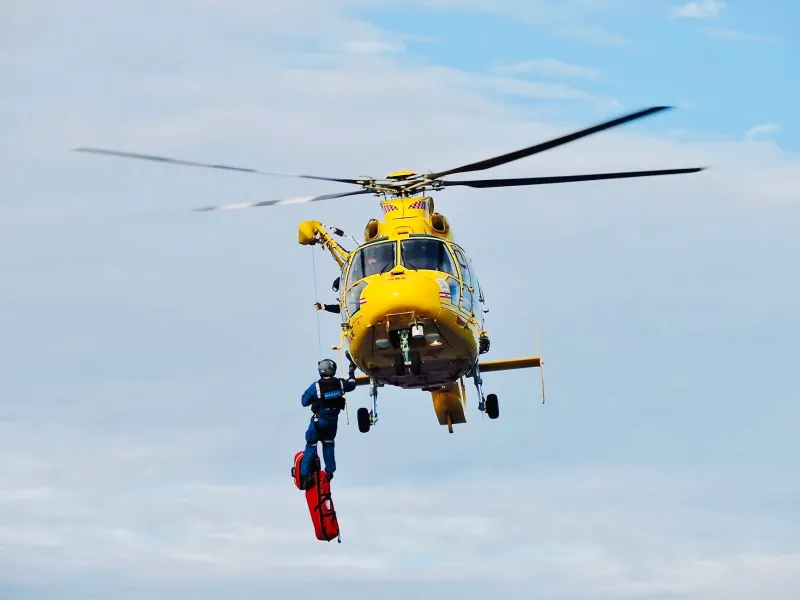
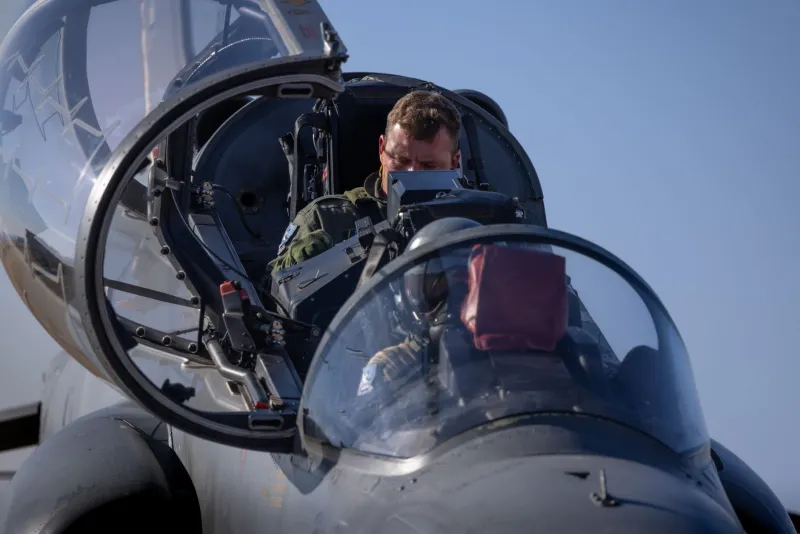
Photo by Photo by Pasqualino Capobianco on Unsplash on Unsplash
For much of the twentieth century, the boundary between military aviation and academic instruction was rarely crossed. Universities taught aeronautical theory; the RAF taught people to fly. The two worlds operated in parallel, occasionally nodding at one another across the fence of Cranwell or Boscombe Down, but seldom converging in any meaningful institutional sense.
That separation is dissolving. Across Britain, a quiet but consequential shift is under way as retired RAF pilots, navigators, weapons systems operators, and flight engineers take up posts within university aviation programmes, bringing with them not just technical knowledge but something harder to quantify: the lived texture of operational flying.
The Men and Women Bridging Two Worlds
At Coventry University's aerospace engineering and pilot training programmes, the presence of ex-military instructors has become a deliberate feature of the curriculum rather than an occasional bonus. Wing Commander (Ret'd) careers are now embedded within course leadership structures, contributing not only to flight training syllabi but to the academic modules that underpin them.
Similarly, the University of the West of England in Bristol — which maintains strong links with the wider aerospace industry clustered around Filton and the South West — has drawn on former RAF fast jet and multi-engine aircrew to advise on the practical dimensions of its professional pilot pathways. The University of Salford, meanwhile, has integrated veterans into its aviation operations management provision, where the logistical and tactical thinking honed over careers in the RAF translates with surprising directness into lessons about airspace management and safety culture.
These are not isolated examples. Across institutions from Bournemouth to Edinburgh, the pattern is repeating itself: universities recognise that the RAF produces some of the most rigorously trained aviators in the world, and that the knowledge accumulated over twenty or thirty years of operational flying cannot be replicated by academic study alone.
What Veterans Actually Bring to the Lecture Theatre
The value proposition is easier to state than to fully appreciate from the outside. When a former Tornado GR4 pilot describes the cognitive workload of a low-level strike sortie in a contested environment, or when a retired C-17 captain recounts the logistics of operating from an austere airfield in a conflict zone, the abstract principles of crew resource management, decision-making under pressure, and situational awareness suddenly acquire weight and specificity.
"There's a tendency in academic aviation education to teach CRM as a set of principles," one former RAF instructor pilot explained to RAF Infos. "What I try to do is give students a framework for understanding why those principles exist — what happens when they break down, what it actually feels like when communication fails at a critical moment. You can only really convey that if you've been there."
This experiential dimension is particularly valuable in simulator training, where the gap between going through the motions and genuinely internalising procedural discipline can be the difference between a safe aviator and a dangerous one. Veterans tend to be unsentimental about that distinction, and students — many of whom aspire to airline or military careers — respond to that directness.
Curriculum Innovation: Where Theory Meets Operational Reality
Beyond individual instruction, former RAF personnel are reshaping the architecture of aviation degree programmes themselves. Several universities have revised their air law, meteorology, and flight planning modules in response to veteran input, incorporating scenario-based learning derived from real operational contexts rather than purely regulatory frameworks.
At one institution in the East Midlands, a former RAF instructor helped redesign the final-year dissertation pathway to include operational case studies drawn from recent RAF deployments. Students are now required to analyse not just technical or regulatory dimensions of aviation incidents, but the human factors and command decision-making elements that military aviation has long treated as central concerns.
The influence extends to professional development as well. Several universities now offer short courses and continuing professional development provision explicitly targeted at serving and recently separated military personnel who are transitioning into civil aviation roles. The veterans who teach on these courses bring a particular credibility — they have made the transition themselves and understand both the institutional culture of the RAF and the expectations of commercial operators.
Mentorship Beyond the Syllabus
Perhaps the most significant contribution these veterans make cannot be captured in module descriptors or learning outcomes. Mentorship — informal, sustained, and deeply personal — is consistently cited by students as the most transformative element of learning from former RAF personnel.
The RAF's culture of debrief, of honest and structured reflection on performance, is something that veterans carry with them into civilian instruction. In an academic environment that can sometimes prioritise the avoidance of criticism over the honest assessment of capability, this approach can be initially jarring for students. It tends, however, to produce more resilient and self-aware aviators.
"The debrief culture is something I wish I'd encountered earlier," said one final-year aviation student at a northern university. "It's uncomfortable at first because you're genuinely expected to account for every decision you made in the sim. But it's also the most useful thing I've experienced in three years of study."
A Relationship That Benefits Both Sides
The flow of value is not entirely one-directional. Universities benefit from the credibility and industry connections that veterans bring; veterans benefit from the intellectual stimulation of academic life and the opportunity to pass on knowledge accumulated at considerable personal cost. The RAF itself benefits indirectly, as the graduates of these programmes enter the aviation industry with a deeper appreciation of military aviation culture and a set of standards that reflect well on the service.
There are challenges, of course. The transition from operational command to academic employment is not always smooth. Military personnel are accustomed to hierarchical clarity and defined authority; universities operate according to a rather different set of institutional logics. Adapting to collegial governance structures, research expectations, and the particular cadences of higher education can require patience on both sides.
Nevertheless, the trajectory is clear. As the RAF continues to evolve its own training partnerships with civilian institutions — the Military Flying Training System being the most prominent example — the integration of veteran expertise into university provision will deepen rather than diminish.
An Investment in Britain's Aviation Future
Britain's aviation sector faces a well-documented skills shortage. Airlines are competing for qualified pilots; the aerospace industry requires engineers who understand not just the theory of flight but its operational realities. The RAF veterans now teaching in Britain's universities represent a remarkable resource: people who have spent careers at the frontier of aviation capability, and who are now investing that experience in the next generation.
The lecture theatre is a long way from the cockpit. But the distance, it turns out, is shorter than anyone imagined.