The Supporting Cast of British Air Power: Seven RAF Display Acts Worth a Wider Audience
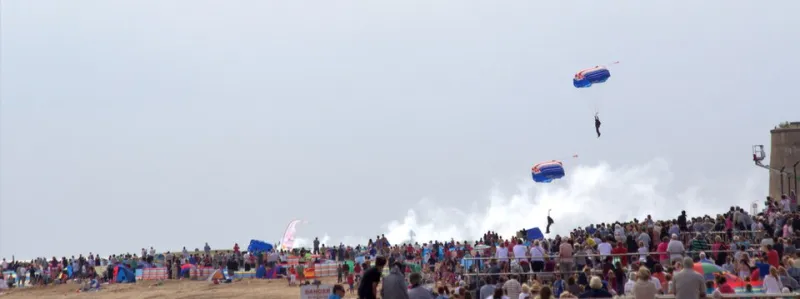
Photo: Christine Matthews , CC BY-SA 2.0, via Wikimedia Commons
Ask a member of the British public to name an RAF display team and the answer will almost invariably be the same. The Red Arrows have become a national institution, and deservedly so. Yet the Service's public-facing effort is considerably broader than one formation of Hawk T1As, and much of it does quieter, more local work that rarely attracts a television camera.
The 2026 display season has now drawn to a close, and with planning already under way for the year ahead, it is a sensible moment to look at the line-up as a whole. What follows is not a ranking. It is an argument that the RAF's engagement portfolio is more varied, and more valuable, than its most famous component suggests.
1. The RAF Falcons
The parachute display team, based at RAF Brize Norton in Oxfordshire, remains one of the most technically demanding acts on the circuit. Jumps are typically made from a considerable altitude, with the team building formations before breaking away to land with precision on a marked drop zone.
What makes the Falcons worth watching is the visibility of the skill involved. There is no airframe to hide behind. Every descent is a demonstration of judgement, timing and physical control, and every display rests on the unglamorous work of rigging, packing and meteorological assessment. For recruitment purposes, the team also showcases pathways into the wider world of RAF parachuting and physical training instruction.
2. The Battle of Britain Memorial Flight
Operated from RAF Coningsby in Lincolnshire, the Flight preserves a Lancaster, Spitfires and Hurricanes in flying condition. It is often described as a heritage act, which undersells it. The BBMF exists to commemorate, and its appearances at memorial events and Battle of Britain commemorations carry a weight that no modern fast jet can replicate.
Equally significant is the engineering story behind it. Keeping aircraft of this age airworthy demands obsessive attention to spare parts, documentation and structural inspection. The Flight is, in effect, a living apprenticeship in airworthiness discipline, and its ground crews are among the most experienced custodians of historic aviation in the country.
3. The RAF Chinook Display Team
Drawn from the Odiham squadrons in Hampshire, the Chinook display demonstrates what a large, heavy rotary platform can do in the hands of a highly trained crew. The manoeuvring is impressive in its own right, but the wider message concerns utility: this is the aircraft that moves troops, delivers stores and evacuates casualties, often in austere conditions.
For a public raised on images of helicopters in disaster relief and evacuation, the Chinook display connects spectacle to purpose more directly than most acts on the circuit.
4. The Typhoon Display Team
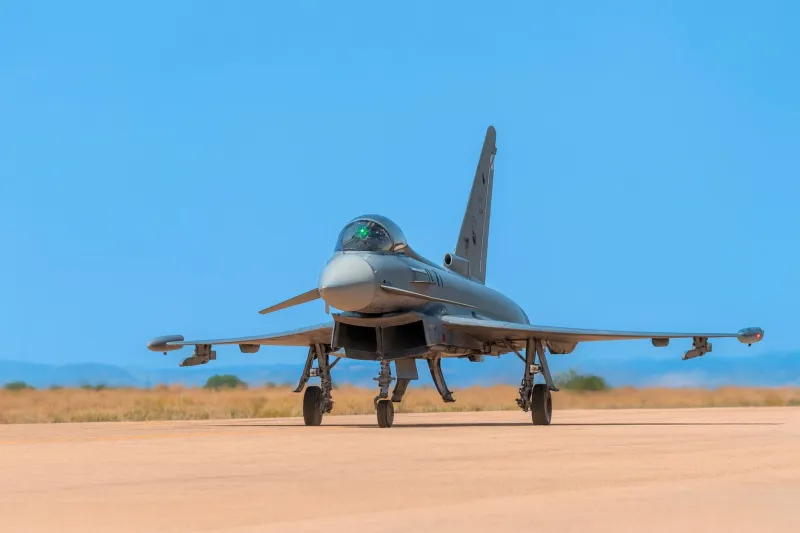
The single-jet Typhoon display, flown by a pilot selected for the role and supported by a dedicated team at Coningsby, is the closest the RAF comes to a classical fast-jet solo. It attracts attention, but rarely the sustained coverage given to the Red Arrows.
That is a shame, because the display communicates two things at once: the extraordinary performance envelope of a modern combat aircraft, and the breadth of the ground organisation required to put it in the air. The display pilot's year is as much about media engagement and school visits as it is about handling.
5. The Atlas demonstration
Heavy-lift displays are an acquired taste, but the A400M Atlas role demonstration has become a valuable part of the circuit. A tactical arrival followed by a short, steep landing tells an audience more about strategic mobility than any static display could.
It is also a useful corrective to the popular assumption that air power is exclusively about combat. The Atlas represents the logistics backbone that makes sustained operations possible, and its public appearances help explain why Britain invests in transport aircraft at all.
6. The Queen's Colour Squadron
Based at RAF Northolt, the squadron carries out ceremonial drill with a precision that has few equivalents in Europe. Its appearances at state occasions, commemorations and public events are a reminder that the Service's identity is bound up with ceremony as well as operations.
For young audiences in particular, the drill display is unexpectedly compelling: it is disciplined, wordless and physically exacting. It also offers a visible route into RAF Regiment and ceremonial roles that rarely feature in recruitment advertising.
7. The Central Band of the RAF
RAF Music Services, with the Central Band among its most prominent ensembles, performs at concerts, commemorations and civic events across the country. Bands are sometimes treated as a pleasant extra rather than an operational asset, which misreads their function. They are among the most effective community engagement instruments the Service possesses, and their reach extends into towns that never see a fast jet.
Why the wider portfolio matters
The value of these acts is not primarily aeronautical. Britain's armed forces compete for attention and for talent in a crowded market, and a regional airshow or a civic concert may be the only contact a young person has with the RAF. A parachute team landing in a country park or a band performing in a town hall does something a flypast cannot: it puts uniformed personnel within conversation distance of the public.
There is a practical argument too. Display pilots and teams are drawn from the same pool of instructors, engineers and aircrew that sustains front-line operations, and the public engagement burden sits alongside professional duties rather than replacing them. Understanding that balance is part of understanding the modern Service.
The Red Arrows will continue to draw the crowds, and there is no reason to resent that. But an air force is more than its most photogenic formation, and the seven acts above are a good place to start looking at everything else.