Wings Over the Threshold: The Ornithologists and Airfield Rangers Keeping RAF Runways Clear
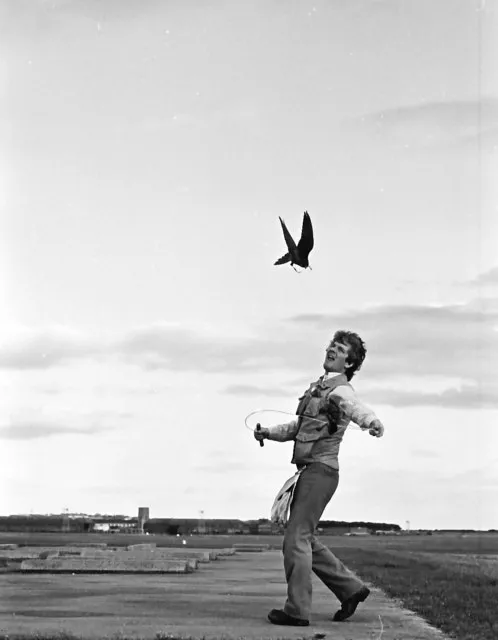
Photo: Des Colhoun, CC BY-SA 2.0, via Wikimedia Commons
At first light on a fighter station in eastern England, a small team walks the grass beside the runway with binoculars, a notebook and a pair of radios. They are not looking for intruders in the conventional sense. They are counting gulls. Their findings, logged before the first aircraft of the day is even towed from its shelter, will shape the flying programme in ways that few outside the airfield boundary will ever notice.
The oldest hazard in aviation
Bird strike predates the jet age by decades, but the consequences have grown starker as aircraft have become faster and quieter. A collision that would barely have dented a 1930s biplane can now shatter a canopy, ingest into an engine or force an abrupt abandonment of a sortie. The overwhelming majority of encounters occur at low level, during the take-off and landing phases, which places the airfield itself at the centre of the mitigation effort.
RAF aerodromes sit in some of the most bird-rich landscapes in Britain: coastal estuaries, lowland farmland, reservoir margins and reclaimed marsh. That is no accident of geography alone. Historic airfield construction created expanses of short grass and open drainage, which to a goose or a gull look like an ideal resting place. The result is a permanent contest between the requirements of flying and the habits of wildlife.
Managing the habitat, not just the birds
The modern approach begins long before anyone reaches for a pyrotechnic. Aerodrome wildlife management rests on the principle that birds follow food, water and shelter; remove the attraction and the numbers fall. Grass is cut to particular heights and at particular times, because closely mown swards appeal to feeding flocks while longer, tussocky grass deters some species, though it can encourage others. Drainage systems are netted, ponds are made less hospitable, and the disposal of waste food on and around the site is tightly controlled.
On larger stations, grazing animals may be used to keep vegetation in check, and hedge and tree management reduces the perching and nesting opportunities that draw raptors and corvids towards the manoeuvring area. Each airfield has its own wildlife management plan, reviewed regularly, because the species that dominate one site in spring may be entirely absent from another in autumn.
Eyes, ears and radar
Observation remains the backbone of the discipline. Airfield rangers and bird control officers patrol at dawn and dusk, recording species, numbers and location, and building the kind of long-term picture that no technology can yet replicate. That data feeds into national reporting, which in turn informs the wider understanding of strike risk across the Service.
Technology is steadily adding to the picture. Avian radar, capable of tracking individual birds and flocks in real time, has been trialled at a number of stations and can provide warnings that human observers would miss in poor visibility or darkness. Bio-acoustic systems broadcast distress calls to disperse flocks, and the traditional tools of the trade remain in service: falconry flights, shellcrackers, and vehicle-mounted dispersal patrols. The choice of method is governed as much by the species and the season as by the equipment available.
The conservation tension
None of this happens in a vacuum. Many RAF stations sit within or adjacent to sites of ecological importance, and the Service has legal obligations towards protected species and habitats. Nesting schedules, translocation schemes and seasonal restrictions all have to be reconciled with flying operations, and the individuals doing that reconciliation are often as comfortable discussing biodiversity action plans as they are discussing birdstrike statistics.
That balance is not always comfortable. A colony of protected birds close to a runway threshold creates a genuine conflict between conservation duty and flight safety, and it is resolved through evidence, consultation and, sometimes, difficult compromise. Enthusiasts who follow the Service closely will recognise the pattern: environmental stewardship and operational output are presented as opposites far more often than the reality warrants.
The split-second call
For all the planning, there are moments when the decision falls to an individual. A pair of buzzards lifting from a grass strip as a Typhoon rolls for take-off. A flock of geese moving across the approach as an Atlas begins its final descent. The bird control officer radios the supervisor, the supervisor speaks to the runway controller, and an aircraft may be held, delayed or sent around on the strength of a judgement made in seconds.
Those calls are rarely dramatic and almost never publicised, but they represent airmanship of a particular kind: an understanding of aircraft performance, wildlife behaviour and the cost of complacency. Birdstrike damage is expensive to repair and, occasionally, far more serious than that.
Why it matters
Air power is often described in terms of airframes, sensors and weapons. The truth is that it depends equally on people who spend their careers making sure the environment around a runway is predictable enough for a pilot to trust. The next time an aircraft lifts cleanly from a British airfield on a summer evening, it is worth remembering the quiet patrols that made the departure unremarkable.